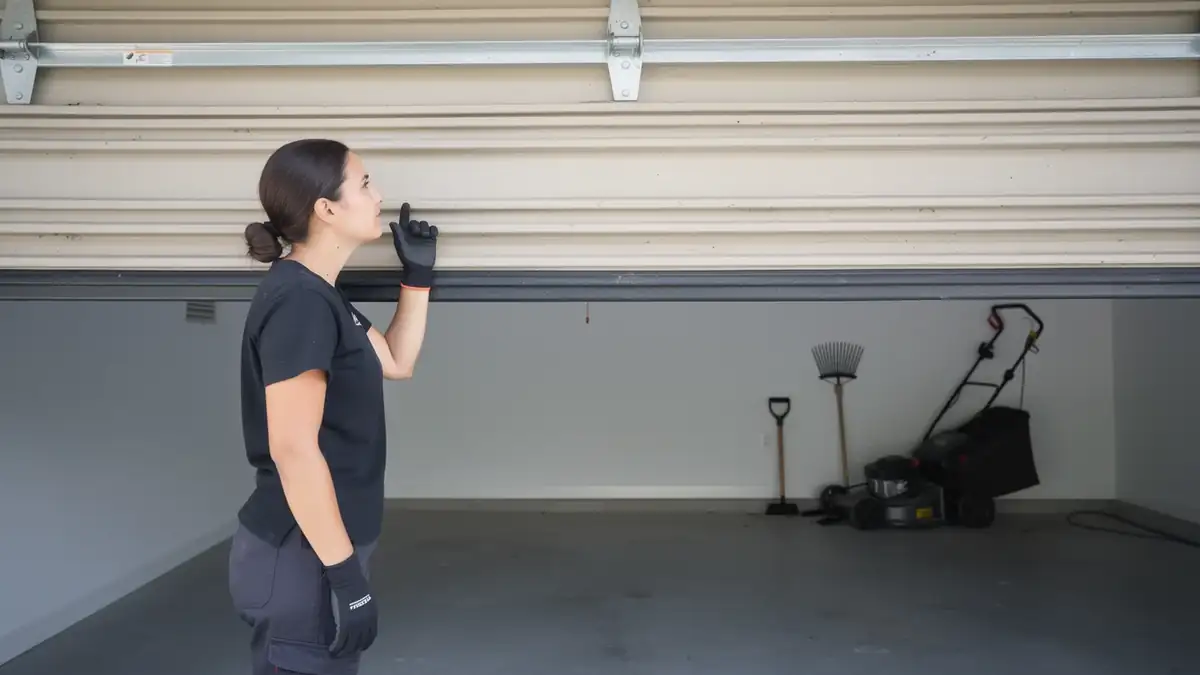
The Problem
Most of the trouble calls we get in Moore trace back to the same thing: the house. Housing here went up mostly between 1959 and 2004, with the bulk of that stock dating to the 1980s and 90s across the area's 18 named neighborhoods. That means a huge share of doors, openers, and torsion springs in this town are all aging out at roughly the same time. A spring rated for a certain number of cycles doesn't care what decade it is, but when thousands of houses got their garage hung within the same twenty-year window, you get clusters of failure instead of a steady trickle.
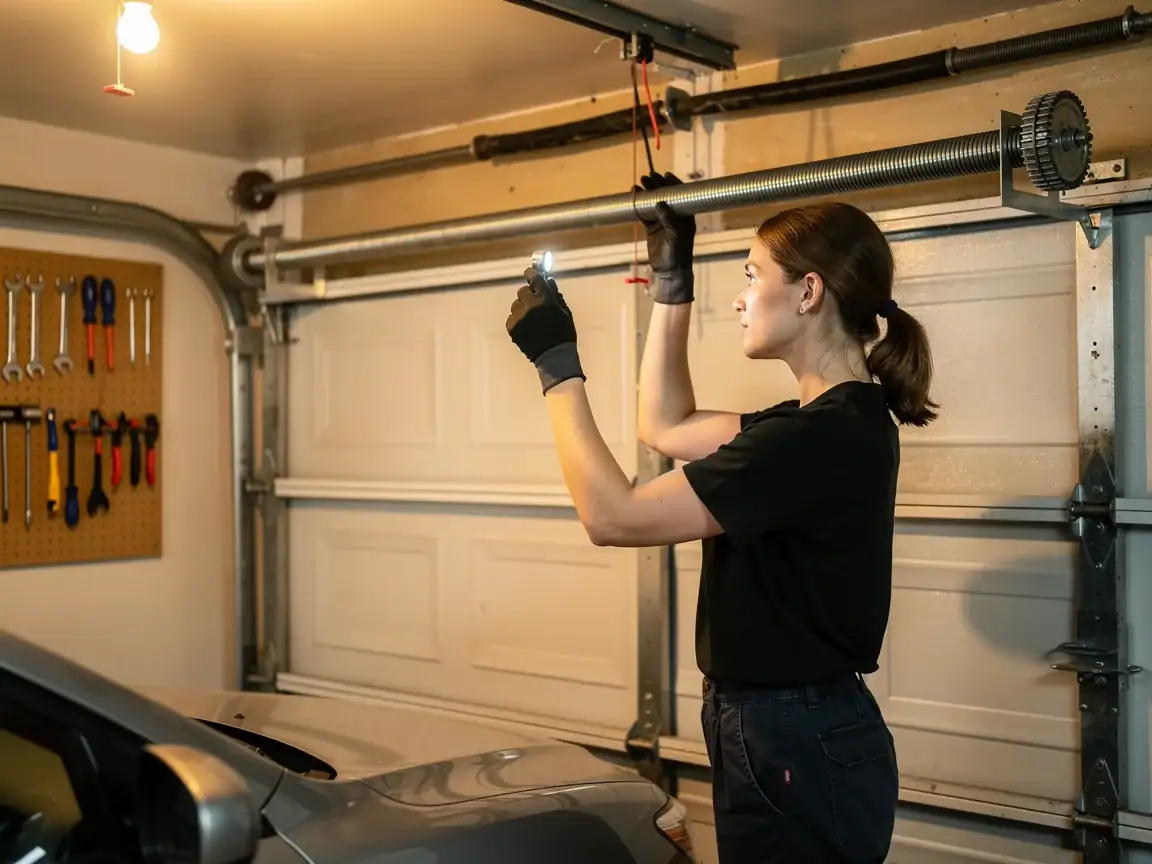
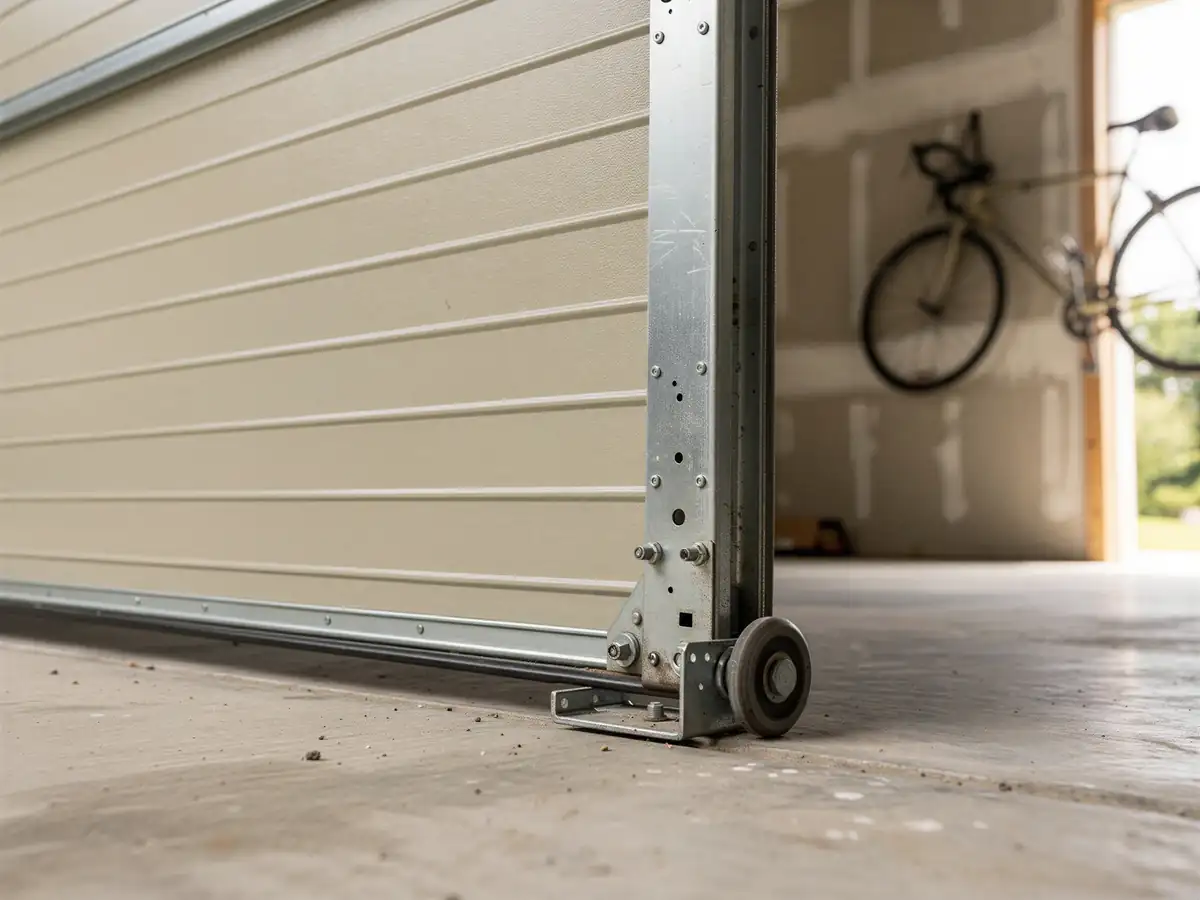
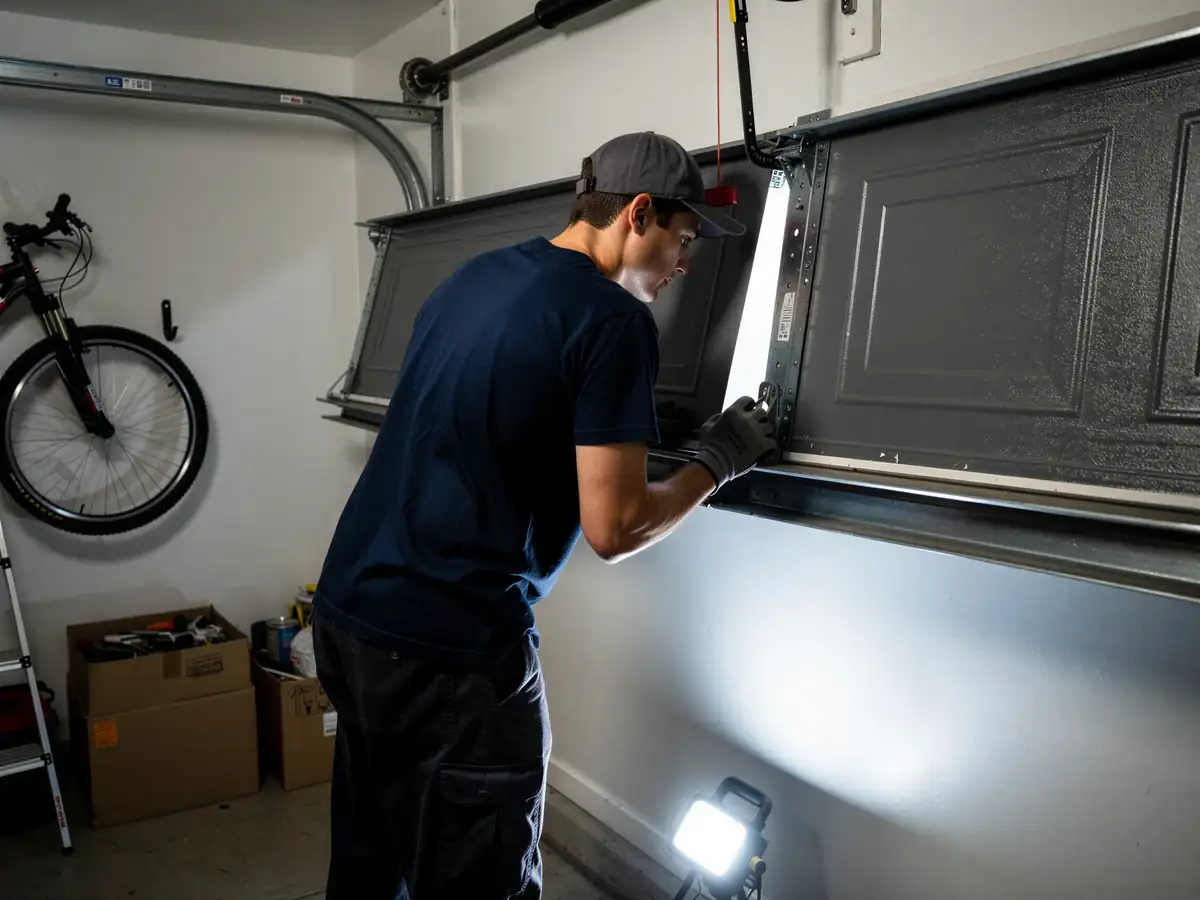
What that looks like in practice: openers from the 80s and 90s boom with chain drives and logic boards that were never designed to run another forty years, tracks bent from doors that have been lifted and dropped a few hundred thousand times, and torsion springs that are either original or a mismatched replacement from whoever worked on the house last. None of this is dramatic. It's just wear, showing up on schedule because the houses themselves are on a schedule.
What You Pay
We're not going to hand you a number here because we don't have one to hand you honestly, and making one up would be worse than saying nothing. What we can tell you is what drives the cost in a town built mostly between 1959 and 2004: age of the opener, whether the spring is a standard size or something a previous owner swapped in that doesn't match the door, and whether the track and rollers are original to a house now pushing 30-40 years old.
Households here have a median income of $81,105, and in our experience that tracks with a simple pattern - when a repair runs close to the cost of a new opener or a full spring set, most Moore homeowners choose to replace rather than keep patching something from the original 1980s or 90s install. That's not a sales pitch, it's just what the math tends to favor once a door's major components are all original-era.
What the Weather Here Does to It
Moore sits in a cold-moderate climate band
That doesn't mean brutal winters, but it does mean the door and its hardware see a real swing across the year - summer heat that expands wood panels and metal track, followed by cold that stiffens lubricant, tightens metal tolerances, and makes a spring under tension work harder to do the same job it did in July.
On a door that's original to a house built in the 1980s or 90s
That annual swing has now happened thirty or forty times. Steel fatigues. Weatherstripping that was flexible in 1985 is brittle now. None of this is unique to any one storm or season - it's cumulative, which is exactly why a door that's been fine for years can suddenly bind, drop, or snap a cable on an otherwise ordinary cold morning.
When to Get Help
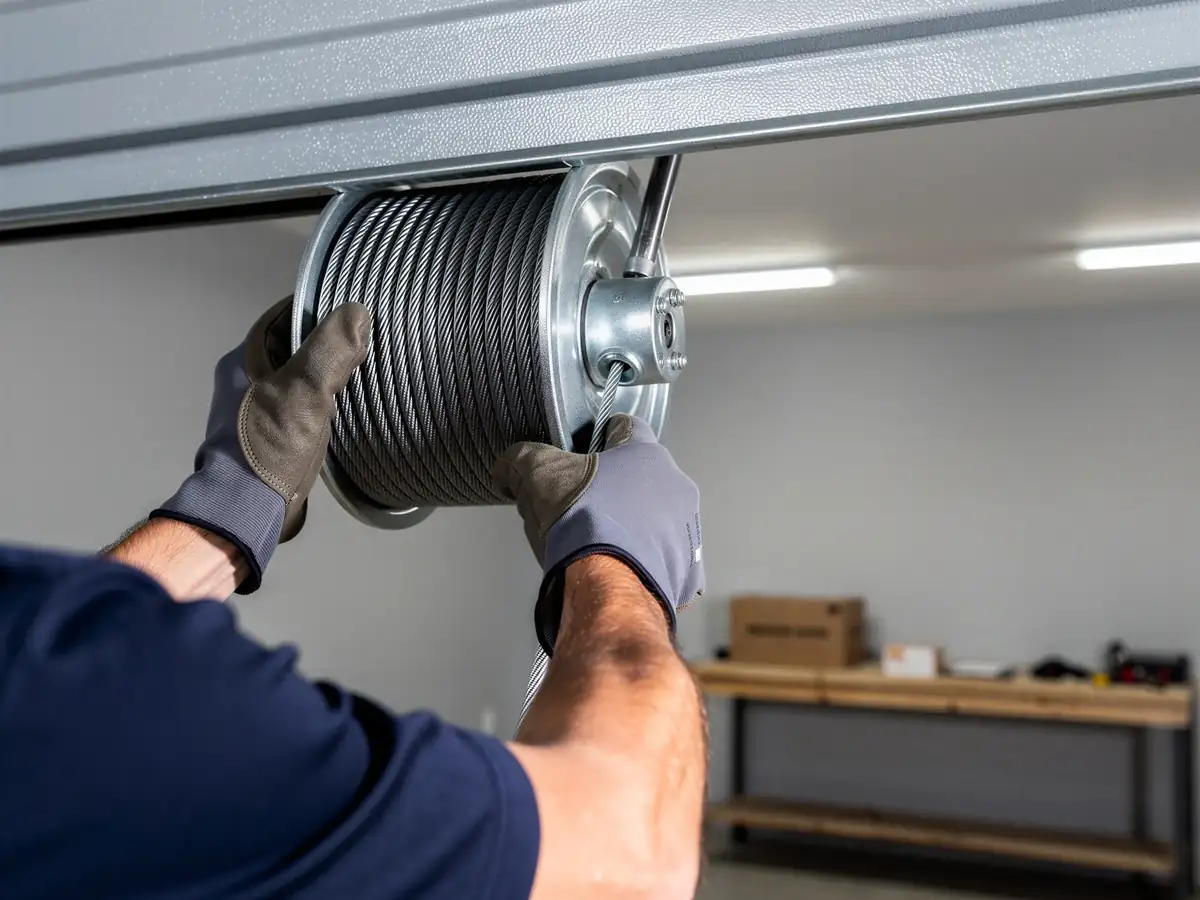
Call before you keep using a door that's making noises that mean something - a grinding on the way up, a bang partway through the cycle, a cable that looks frayed, or a door that drops faster on one side than the other. Those aren't quirks, they're a torsion spring or a track telling you it's close to done.
We won't tell you every repair makes sense. If the opener is original to a 1980s build and the logic board is the part that's failed, parts for that exact model often aren't available anymore, and we'll say so rather than charge you for a search that won't find one. Given how much of Moore's housing landed in that same 1959-2004 window, this comes up more here than it might somewhere with newer stock. When replacement is the straighter path, we'll tell you that instead of stretching out a repair that won't hold.