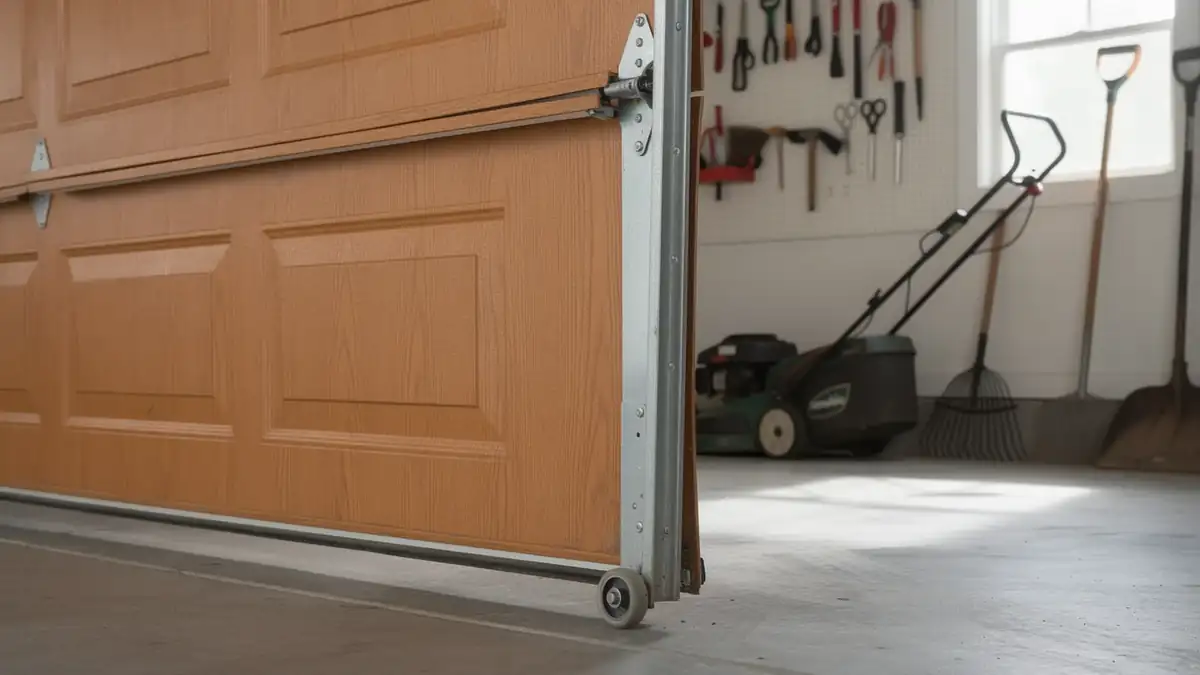
The Problem
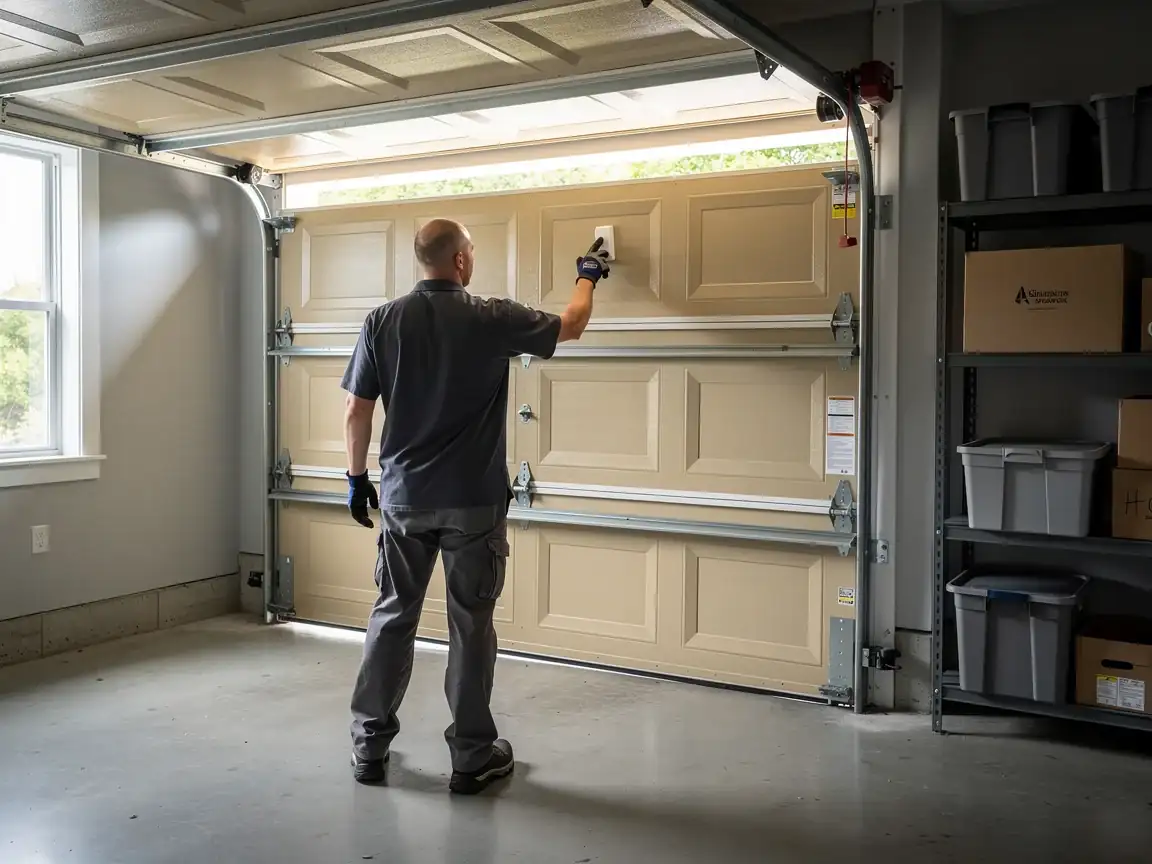
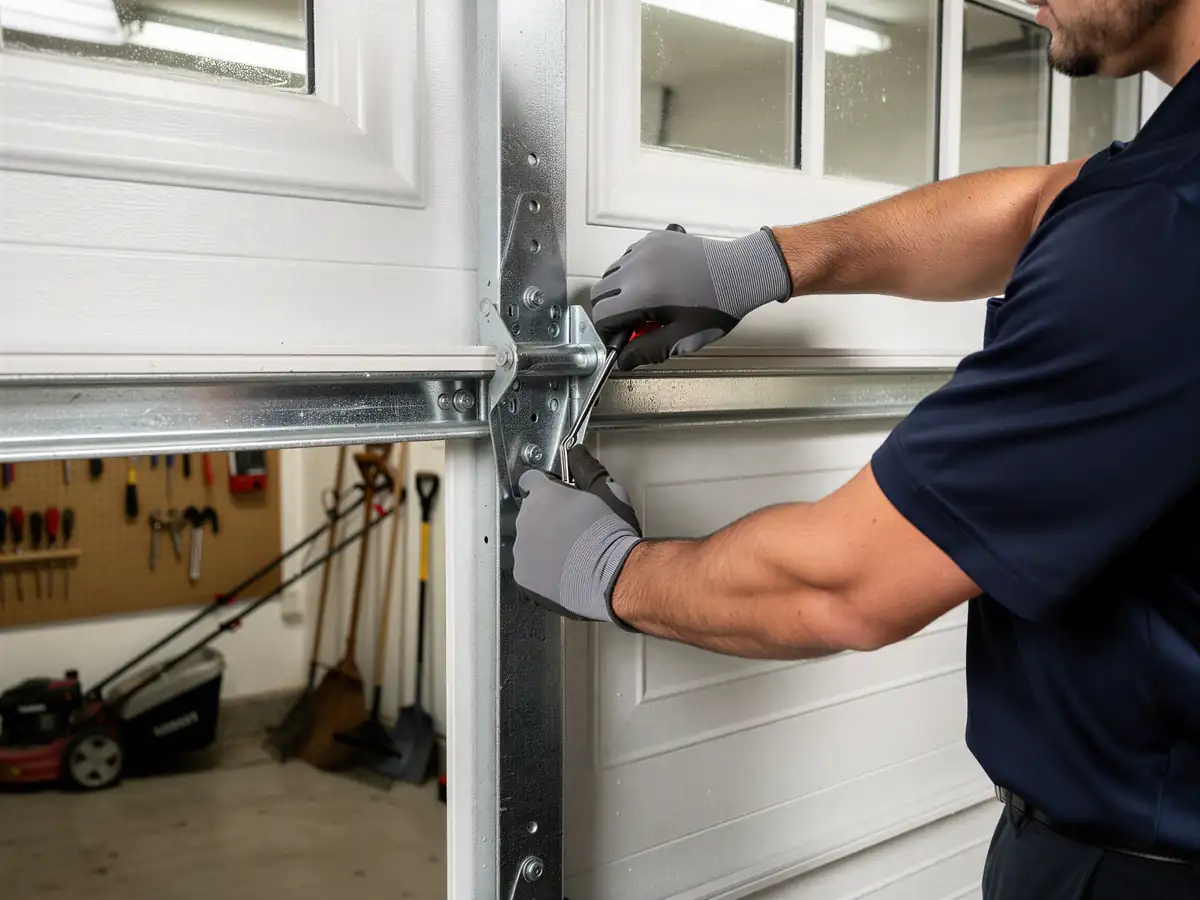
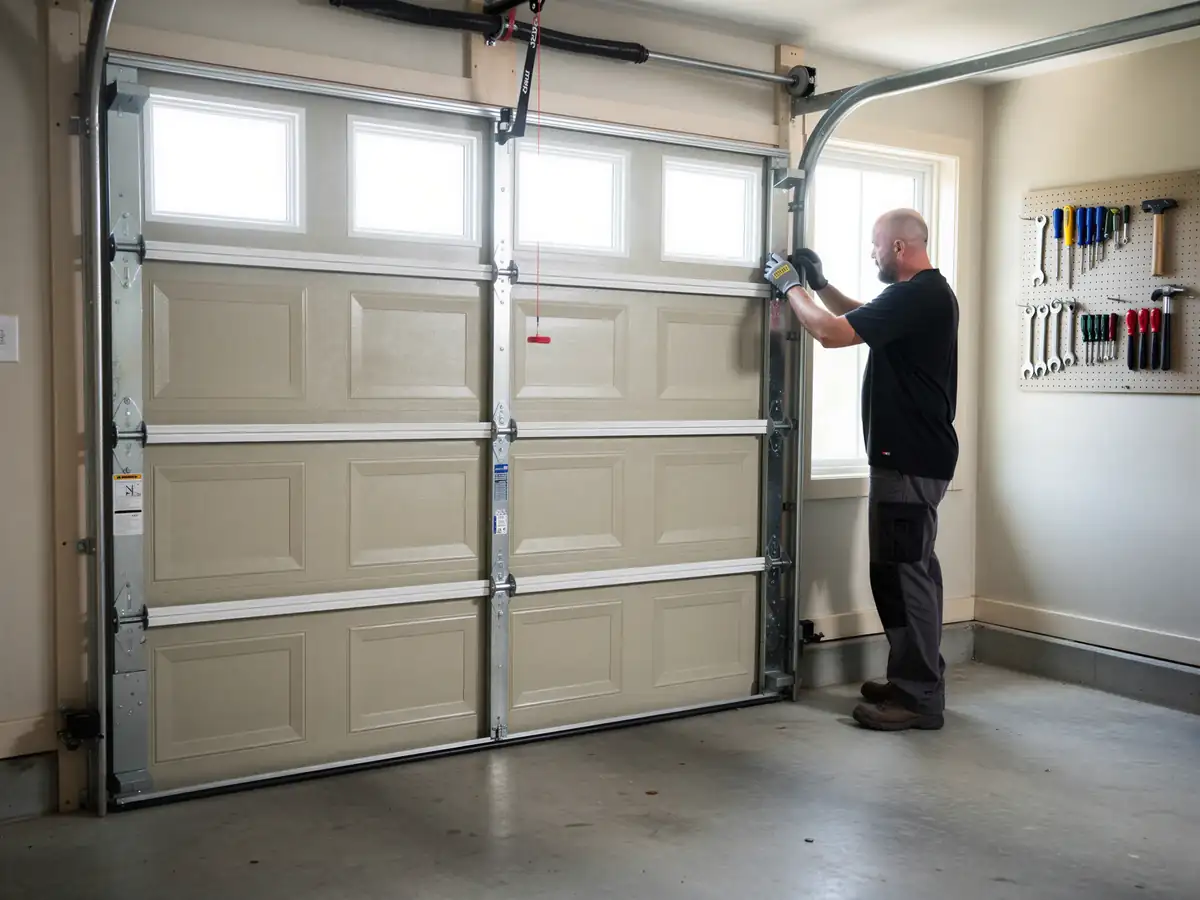
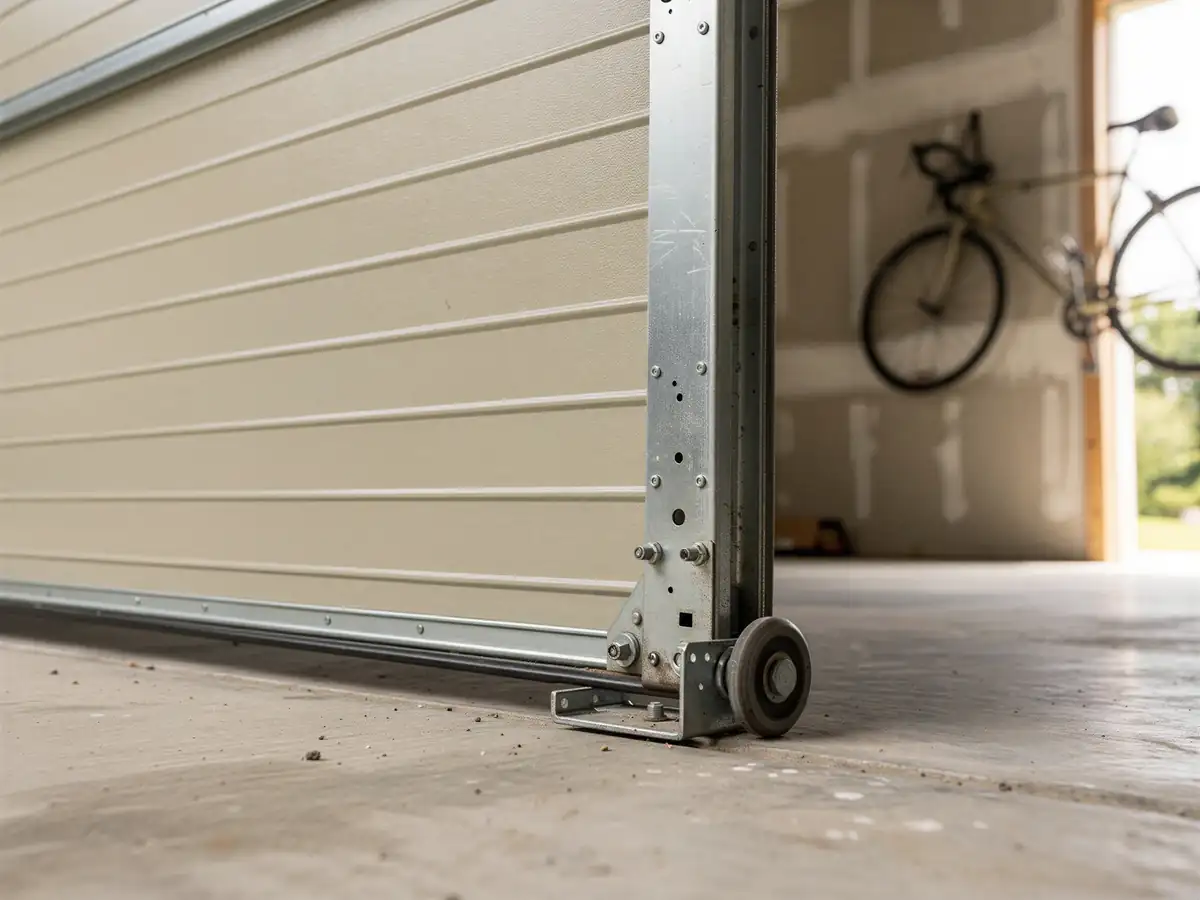
A door comes off track for one of three reasons: a bent rail, a roller that's worn down to the bearing, or a bracket that's finally given up after decades of holding the weight of a panel system. In Moore, that third cause shows up a lot more than homeowners expect. Most houses here went up between 1959 and 2004, with the heaviest building stretch in the 1980s and 90s. That means a big share of the garage doors in this service area are still running on the steel track brackets that came with the house - lag-bolted into framing that's now forty-plus years old.
When a bracket loosens even a little, the track shifts out of plumb. The rollers start riding the edge instead of the center of the rail, and eventually one pops loose entirely, usually on the way down when the door's weight is working against gravity instead of with it. A hard stop, a stuck remote, or a dog leaning on the bottom panel can all do it too, but on a system that old, it rarely takes much. The hardware is doing a job it was built to do for maybe half the years it's actually logged.
What You Pay
We can't give you a number here without seeing the door - a bent section of track and a loose bracket are two very different jobs, and so is a track replacement versus a full realignment. What we can tell you is how to think about it. With 39,476 owner-occupied houses across this service area and most of that stock dating to the 1980s and 90s, a lot of track systems out there are original. Patching a forty-year-old bracket with new screws sometimes holds, and sometimes it's a stopgap that fails again in six months.
At a median household income of $81,105 in this area, most owners we talk to would rather pay once for new track and brackets than pay twice for a patch and then a replacement. That's not a sales pitch, it's just the math on hardware this old. If your track is from the original build, ask straight out whether a repair is going to hold or whether you're buying time. A straight answer costs nothing and saves you a second call.
What the Weather Here Does to It
Moore sits in a cold-moderate climate band
Not the deep-freeze extremes of further north, but enough swing between a summer afternoon and a January morning to work on steel and aluminum year after year. Track brackets expand slightly in heat and contract in cold, and that repeated movement loosens the lag screws holding them to the frame. On a newer track system the metal has more give. On original hardware from a house built in the 1980s or 90s, the screws have already been through thirty-plus of those cycles, and the wood around them has compressed.
The same freeze-thaw pattern affects the track itself where moisture gets into the rail
A little surface rust on the inside edge changes how the roller rides, which is a different problem from a bent track but looks similar from the floor of the garage. Neither one is dramatic weather. It's just steady, ordinary temperature swing doing its slow work on hardware that's rarely been touched since it was installed.
When to Get Help
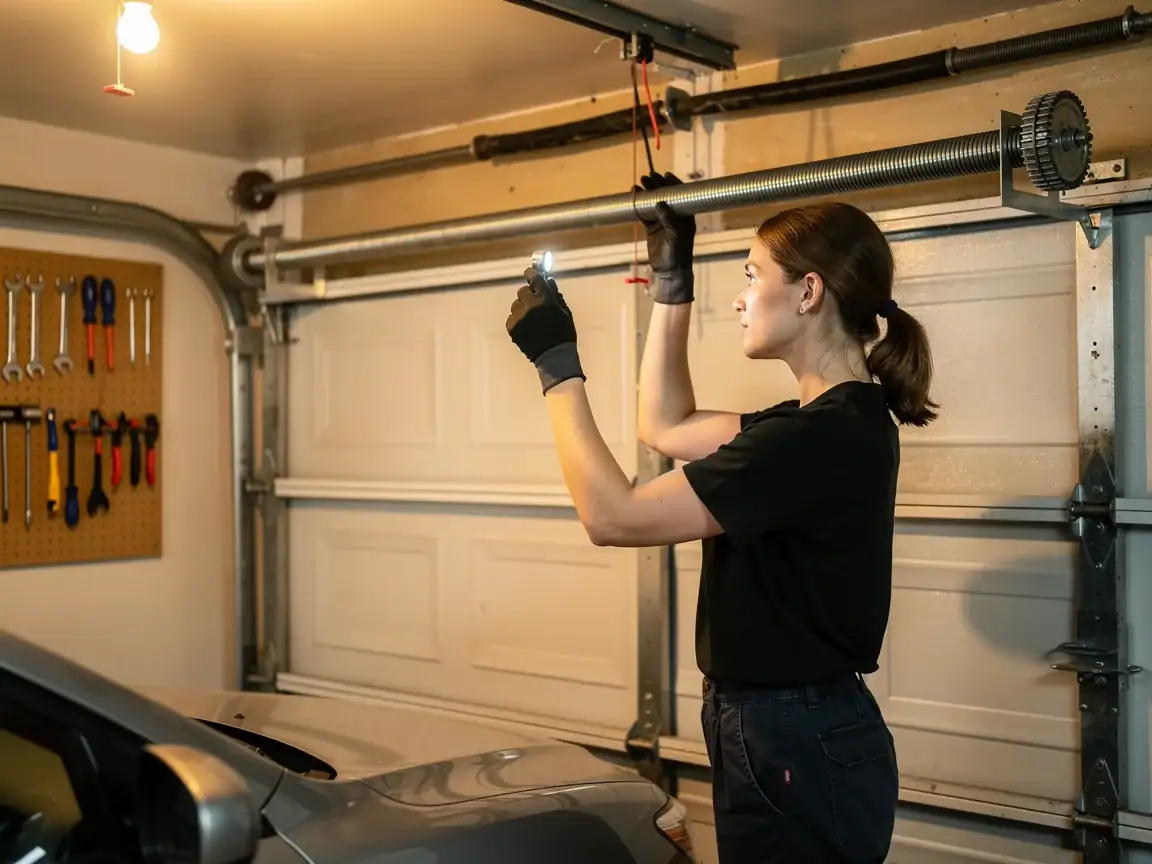
Call before the door comes all the way off, not after. The warning signs are usually there first: a grinding sound as the door travels, a visible gap between roller and rail, the door sitting crooked when it's halfway open, or a panel that wobbles side to side instead of running straight up. Any of those means the track or the bracket holding it is already compromised, even if the door is still technically working.
Don't try to force a door back onto its track yourself - under spring tension that's how fingers get caught and tracks get bent worse. If the door's already jumped the rail, leave it where it sits and call. We work out of Moore and cover the surrounding area, including Del City eight miles east, Newcastle nine miles south. One honest limitation: if the track is badly bent or the cabinet it's mounted to has rotted out, realignment isn't the fix - at that point you're looking at new track and hardware, and we'll tell you that straight instead of billing you for a temporary patch.