What You Pay
What a job costs here comes down to what's on the house, not a flat rate we quote over the phone. A lot of Moore homes went up between 1959 and 2004, with most of the stock dating to the 1980s and 90s, so you'll find both older extension-spring setups and newer torsion systems depending on which part of town you're in. Torsion spring jobs on a double door cost more than a single door with one spring, and if the opener is original to a 1980s build, the drive gear or circuit board sometimes has to be special-ordered rather than pulled off a shelf truck-side. We don't post a price list because a snapped cable job and a full spring-and-roller job aren't the same money, and quoting blind before we've seen the door does nobody any favors. With median household income in the service area around $81,105, most owners we talk to are choosing a repair that gets another decade out of a door that's otherwise sound, rather than jumping straight to replacement. We'll tell you up front if a repair isn't worth it against a new door - that call matters more than the invoice.
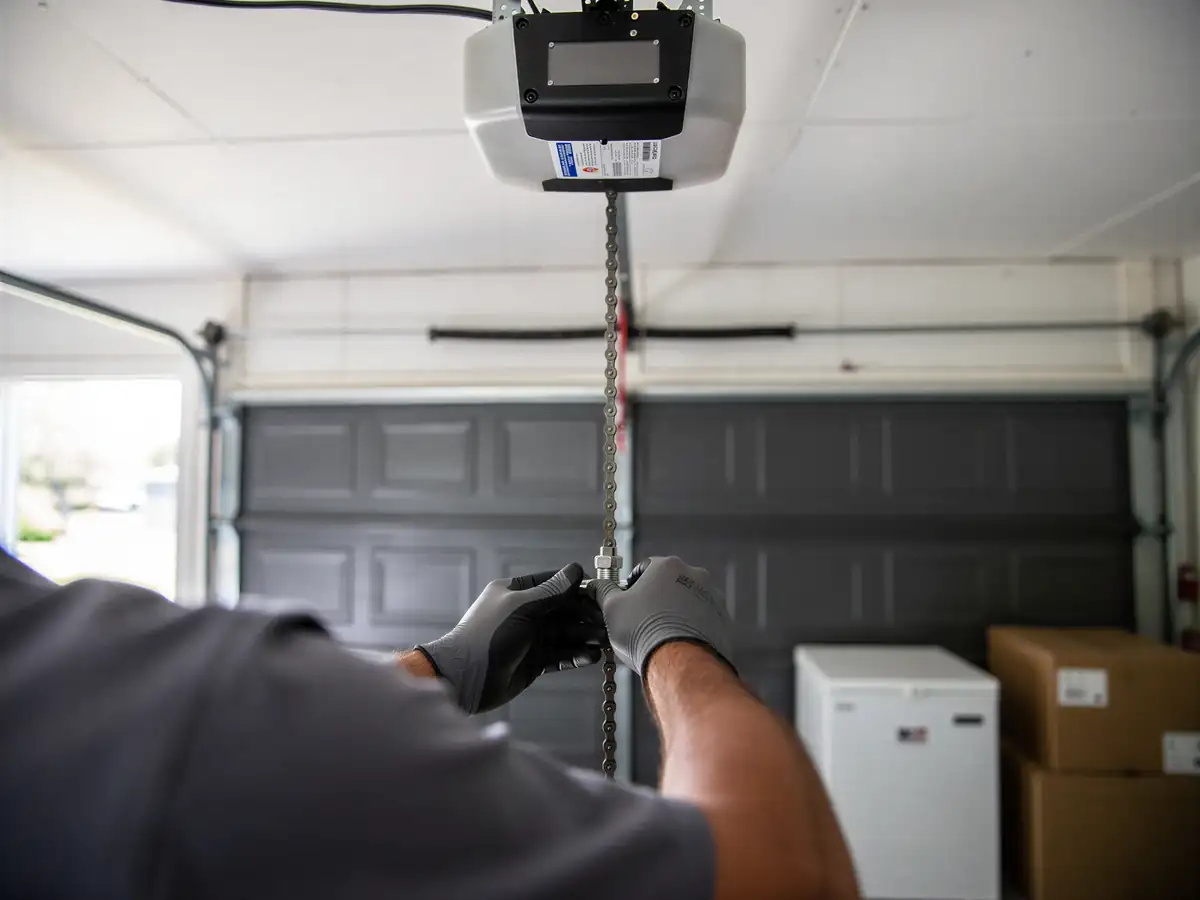
We're straight about it when a part is obsolete: some 1980s opener boards are no longer made, and you're better off swapping the opener than chasing a part nobody stocks.
Time on the Job
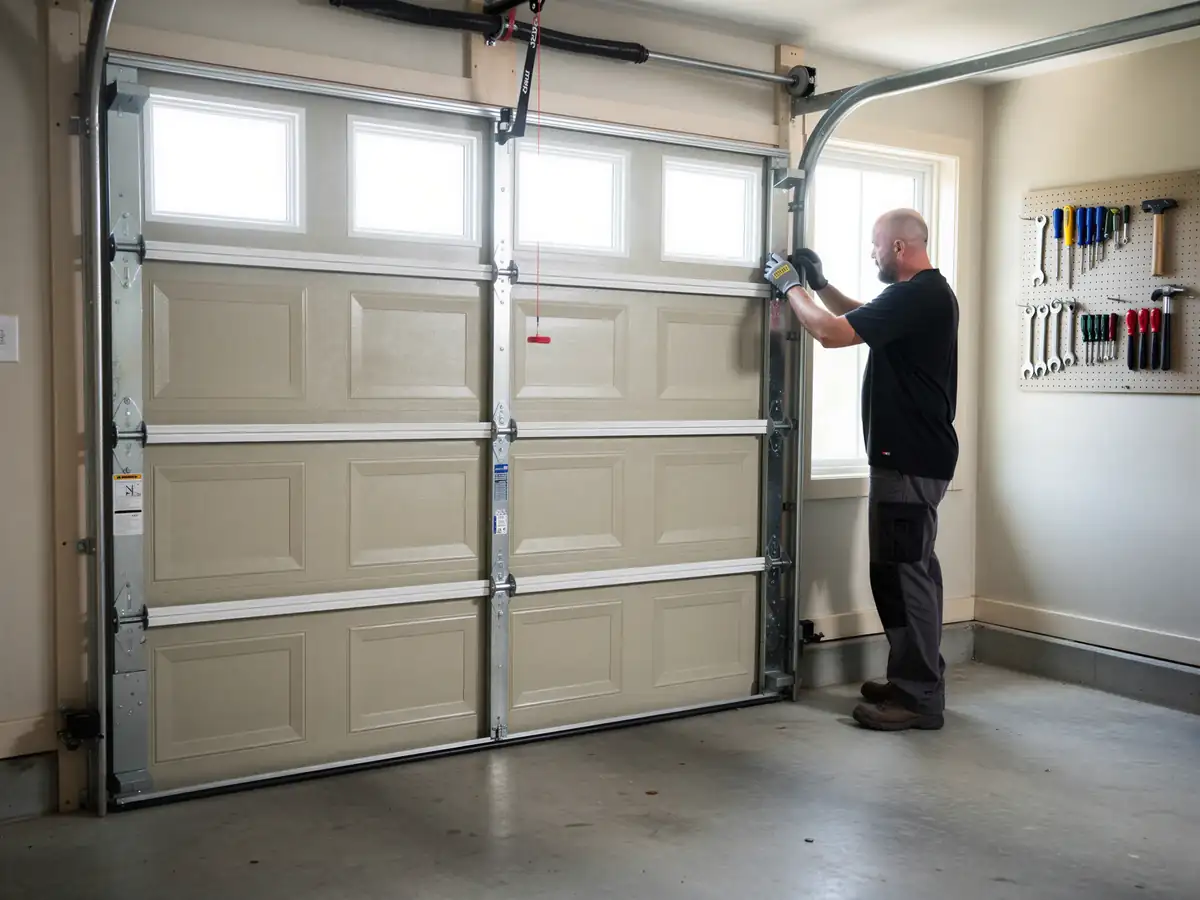
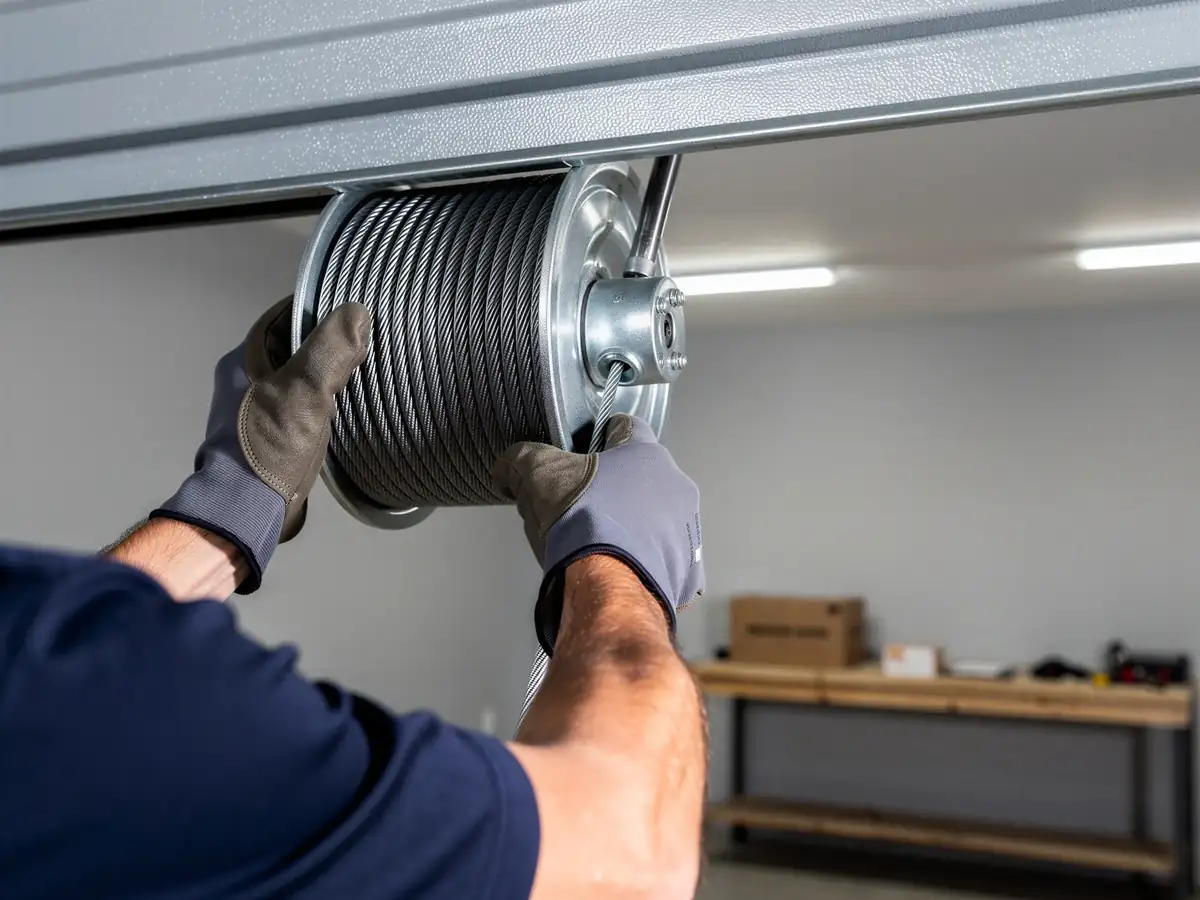
Most spring and cable repairs on the kind of torsion hardware common in Moore's 1980s-2000s houses get done in one visit - we carry standard spring sizes and rollers on the truck because that's what fits the bulk of the doors we see here. Where it slows down is parts tied to the house's age: an opener original to a build from the early 1980s may use a logic board or wall control that isn't a current part number, and that piece sometimes has to be ordered rather than installed same-day. We'll tell you at the door, before we start, whether your job is a same-visit fix or a return trip.
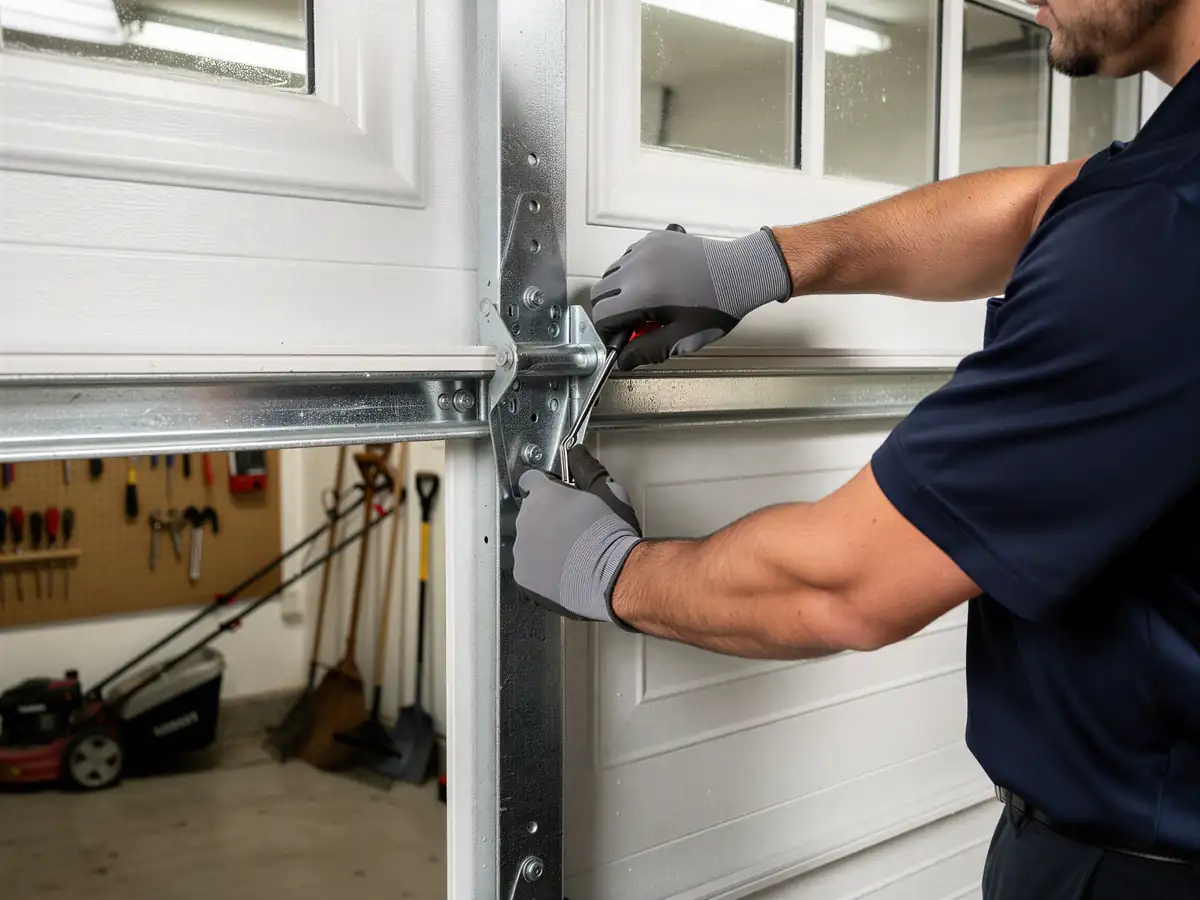
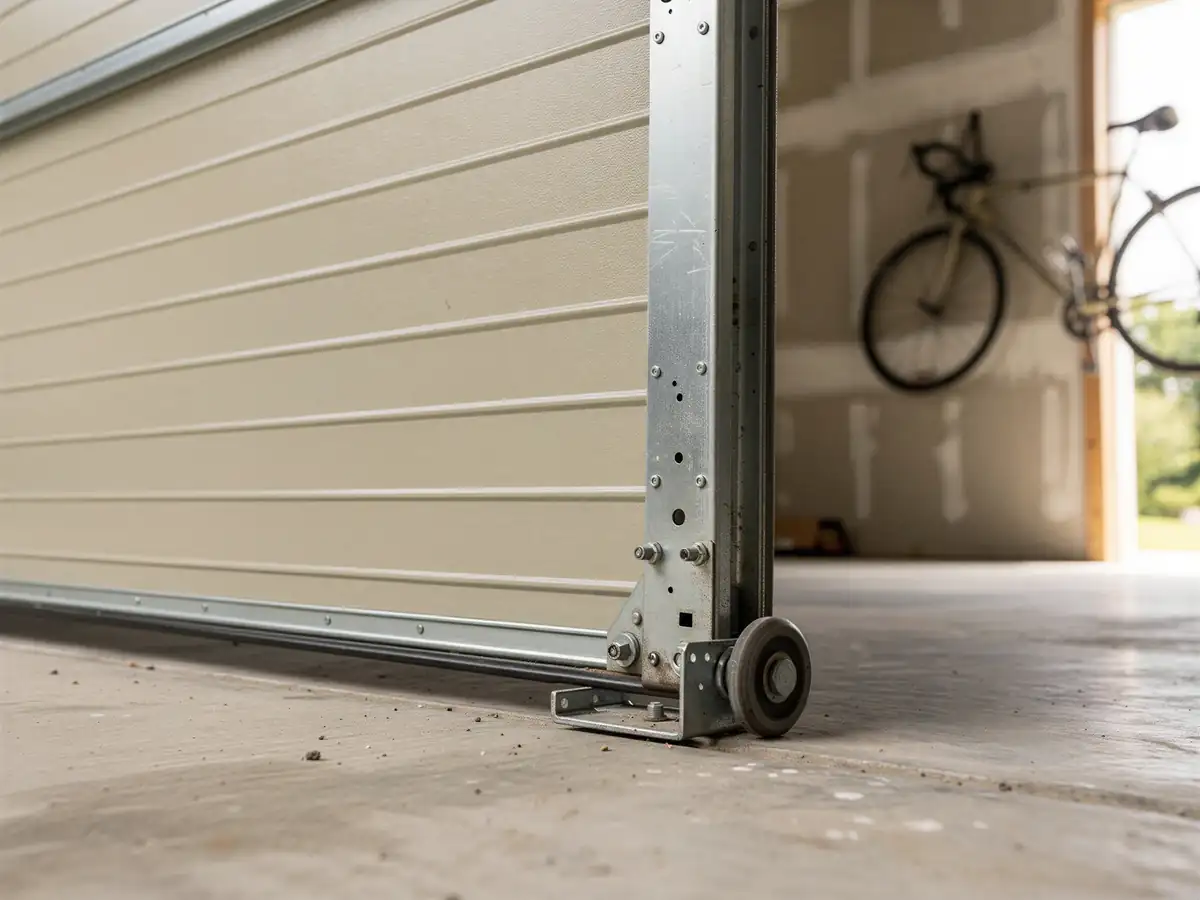
Double doors with two springs take longer than a single door with one, simply because there's twice the hardware to pull and reset. Track alignment and roller replacement on older steel doors - common in the 1980s/90s stock across Moore's established areas - usually adds time versus a straight spring swap, since years of panel sag have to be corrected before the new spring will hold tension right. None of that is a guess; it's what we find opening up doors from that era, over and over.
If a job needs a part we don't carry, we say so instead of padding the ticket with a return visit nobody asked for.
How It Shows Up
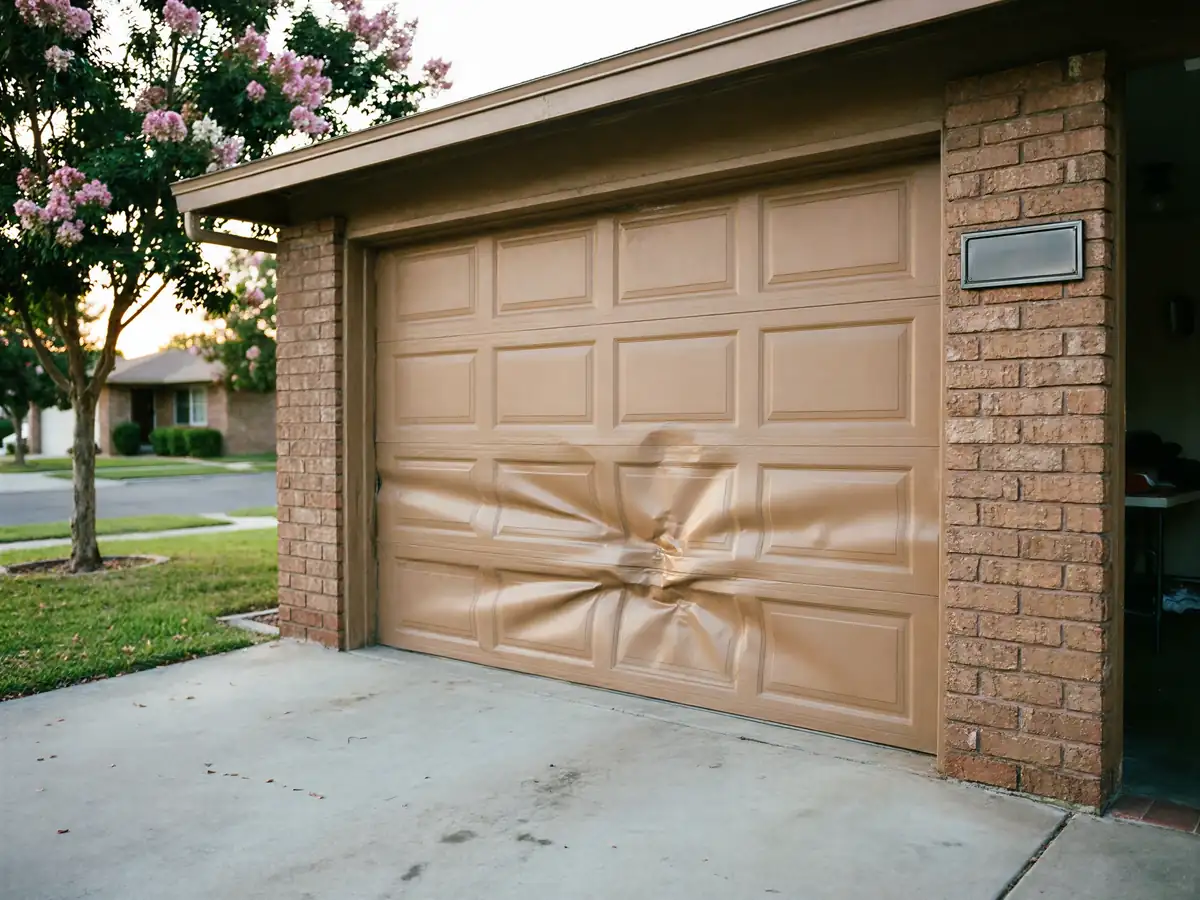
The most common call we get is a door that won't budge and a loud bang from the garage the night before
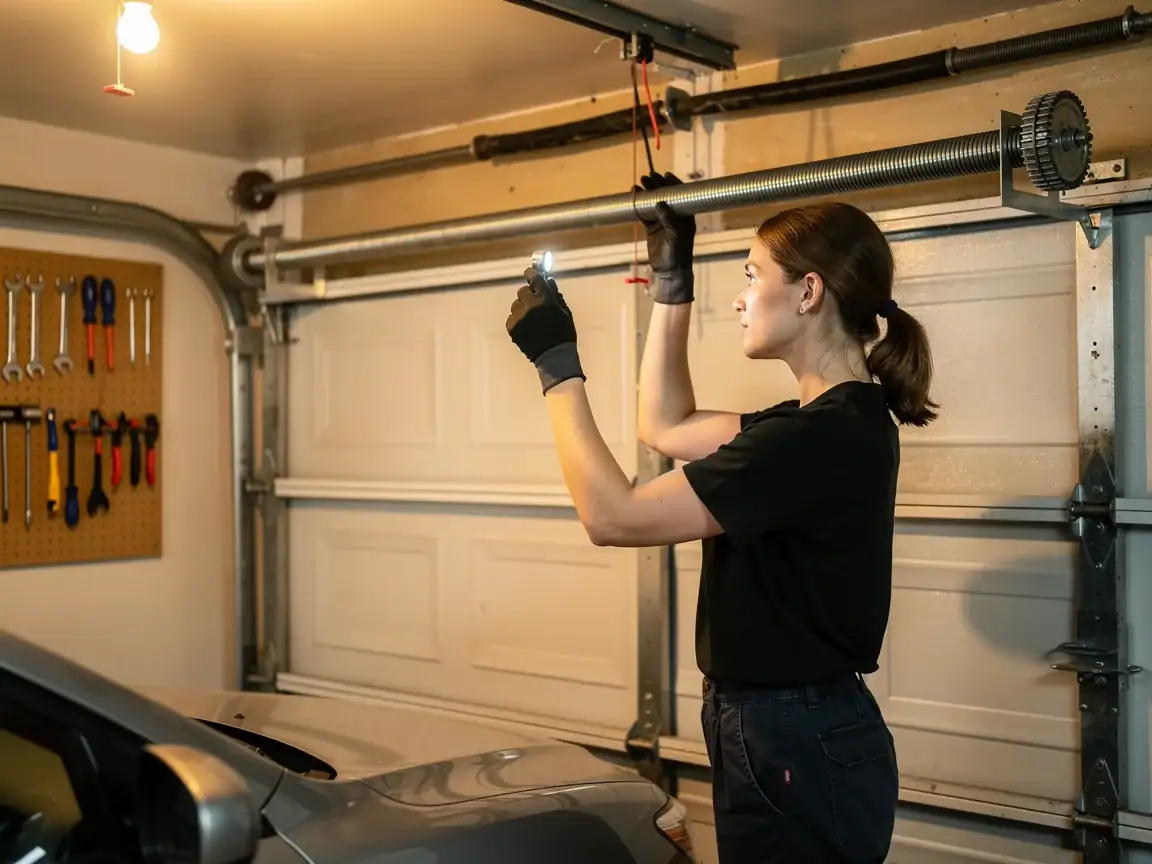
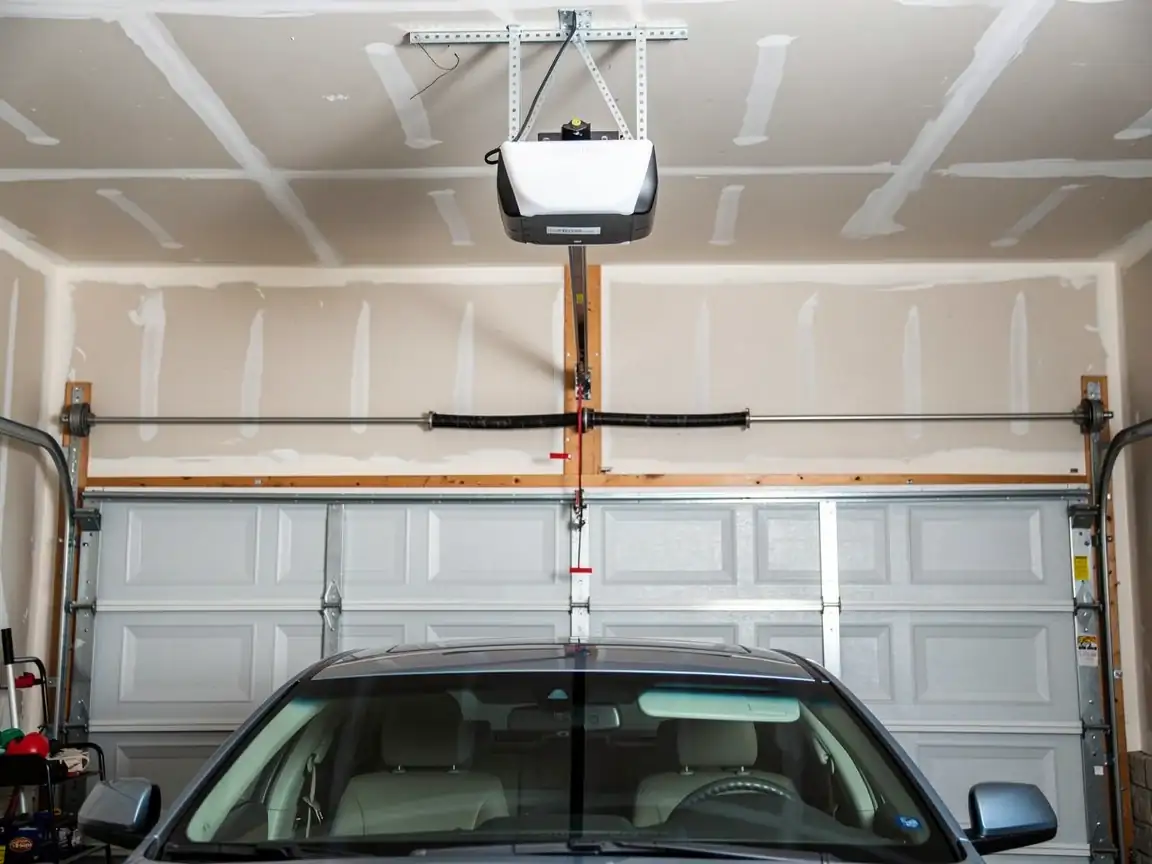
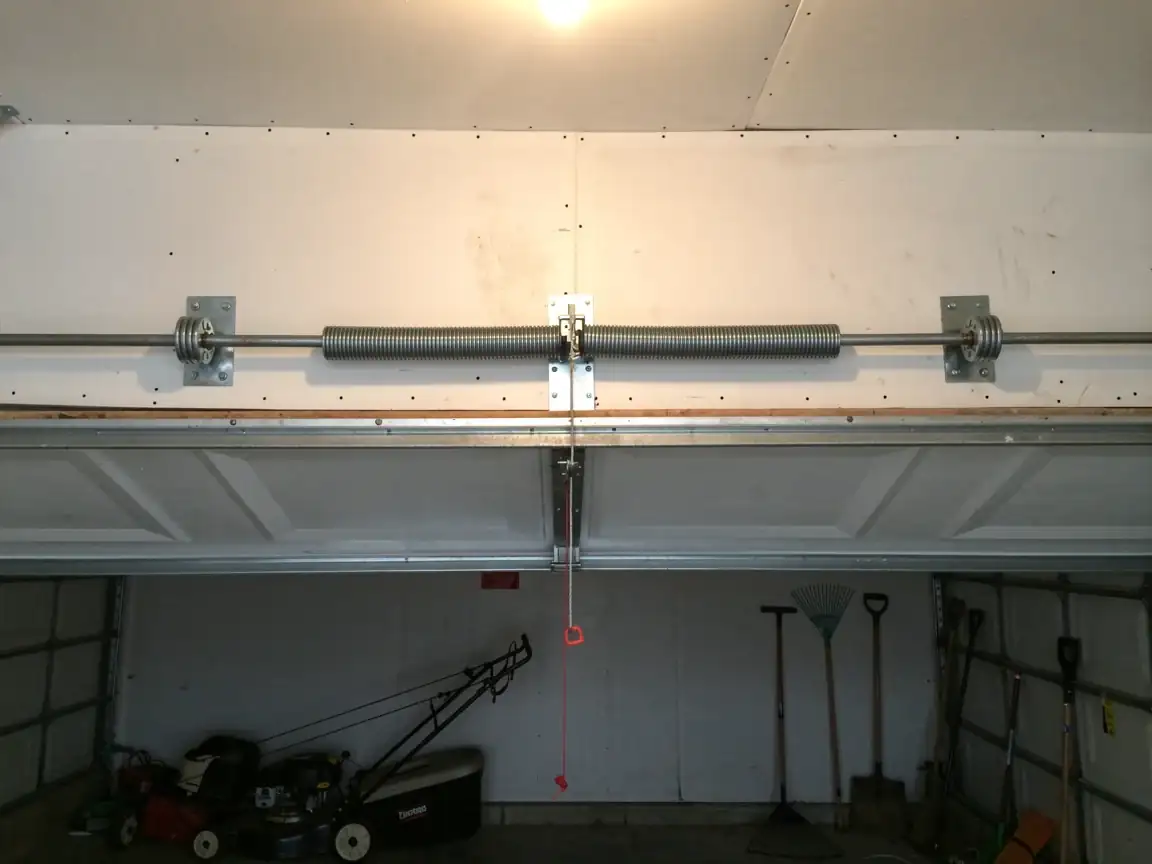
That's a torsion spring letting go, and on the 1980s and 90s doors that make up most of Moore's housing stock, that spring has usually been doing its job with zero attention for twenty-plus years. Second most common: an opener that runs but the door barely lifts, or reverses halfway up. That's almost always the spring losing tension gradually rather than snapping outright, and the opener motor straining to cover for it.
On older steel doors you'll also hear a grinding or scraping sound as rollers wear out of round
Especially on tracks that haven't been lubricated since the house was built. In Moore's cold-moderate climate, steel hardware contracts in a hard overnight freeze and expands again by afternoon - that repeated flex is what finally snaps a spring that was already near the end of its rated cycles.
We don't try to diagnose over the phone past the basics
A bent track, a dead spring, and a failing opener can all sound similar from inside the house, and guessing wrong before we've seen the door wastes your time and ours.
Why It Happens Here
Moore's housing dates mostly from 1959 to 2004, with a median build year around 1980, and the bulk of what's on the ground is 1980s and 90s construction spread across the area's established subdivisions. That matters for one simple reason: torsion springs are rated for a set number of open-close cycles, and a door installed when a house was built in 1982 is well past that number by now, cycle count aside from any obvious damage. Age alone wears the spring out even on a door that's never been hit or misused. Moore sits in a cold-moderate climate band, which means real winter cold snaps followed by swings back up, not a steady mild year-round temperature. Steel spring wire fatigues faster under that kind of repeated contraction and expansion than it would somewhere with a flatter temperature curve, and that's on top of the cycle wear from normal daily use. Put a 40-year-old steel spring through that temperature swing every winter and the failure isn't a surprise - it's overdue.
That combination - an aging housing stock concentrated in a narrow build window, plus a climate that stresses metal hardware every winter - is why spring failure is the single most common call we get across Moore's neighborhoods, more than any other single issue.