Why It Happens Here
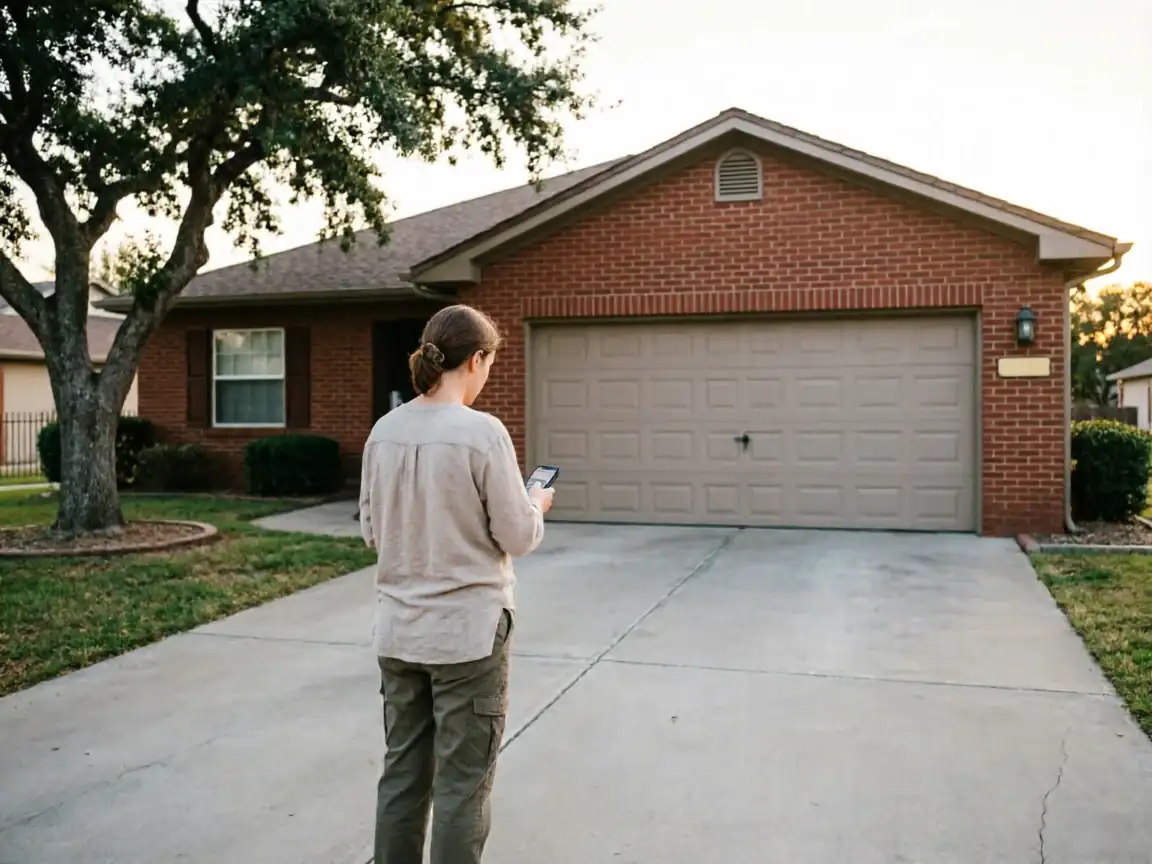
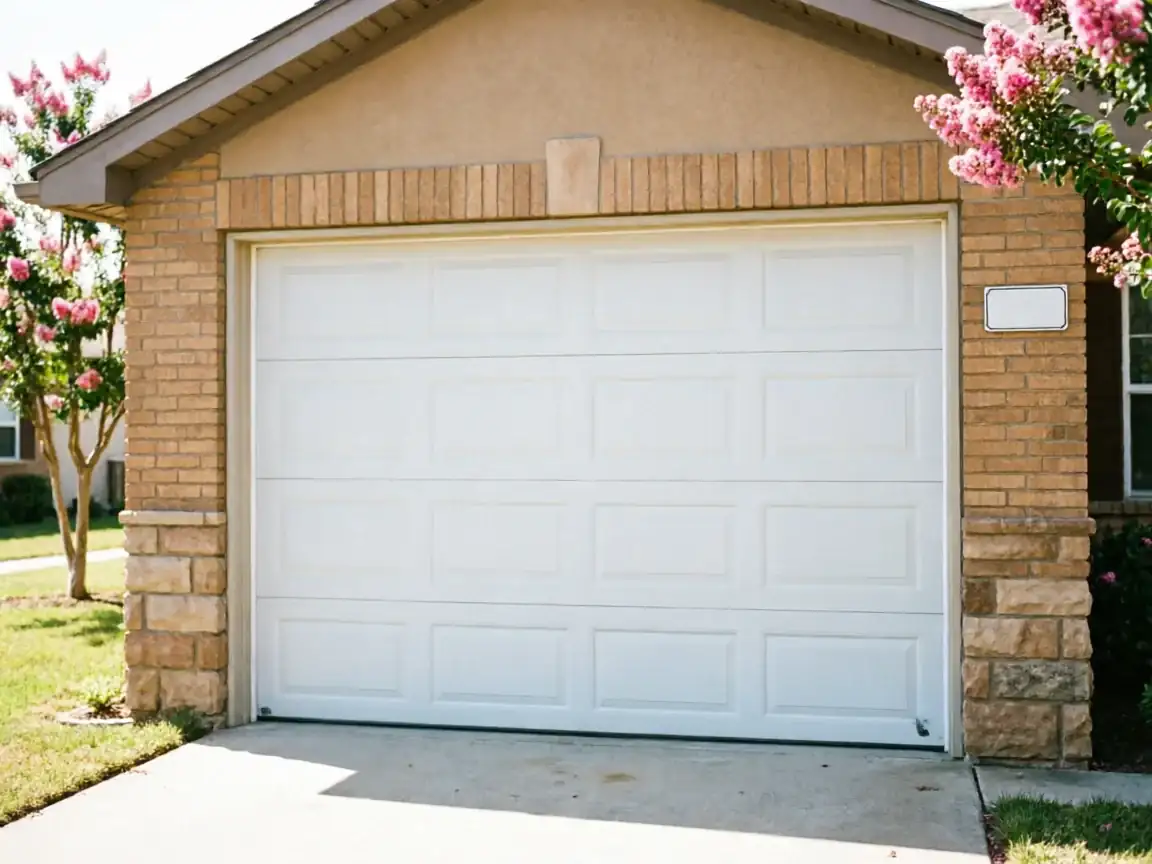
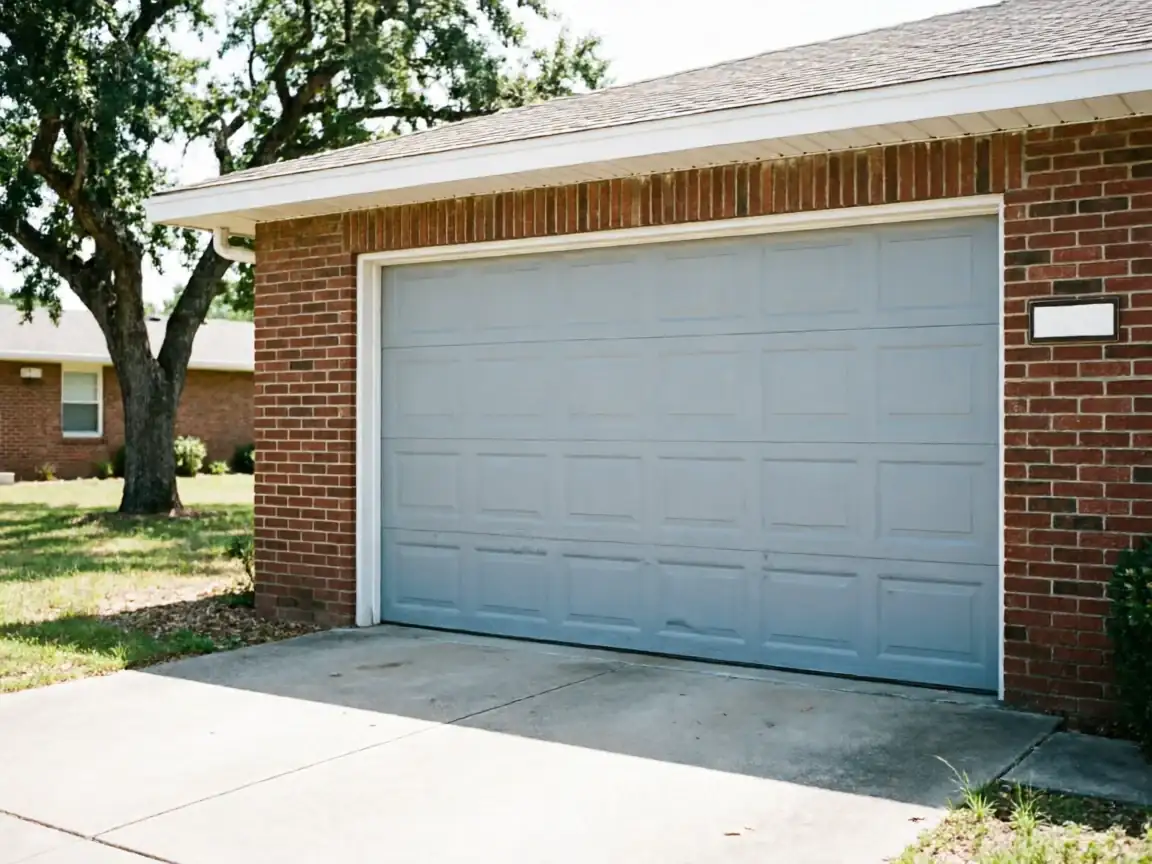
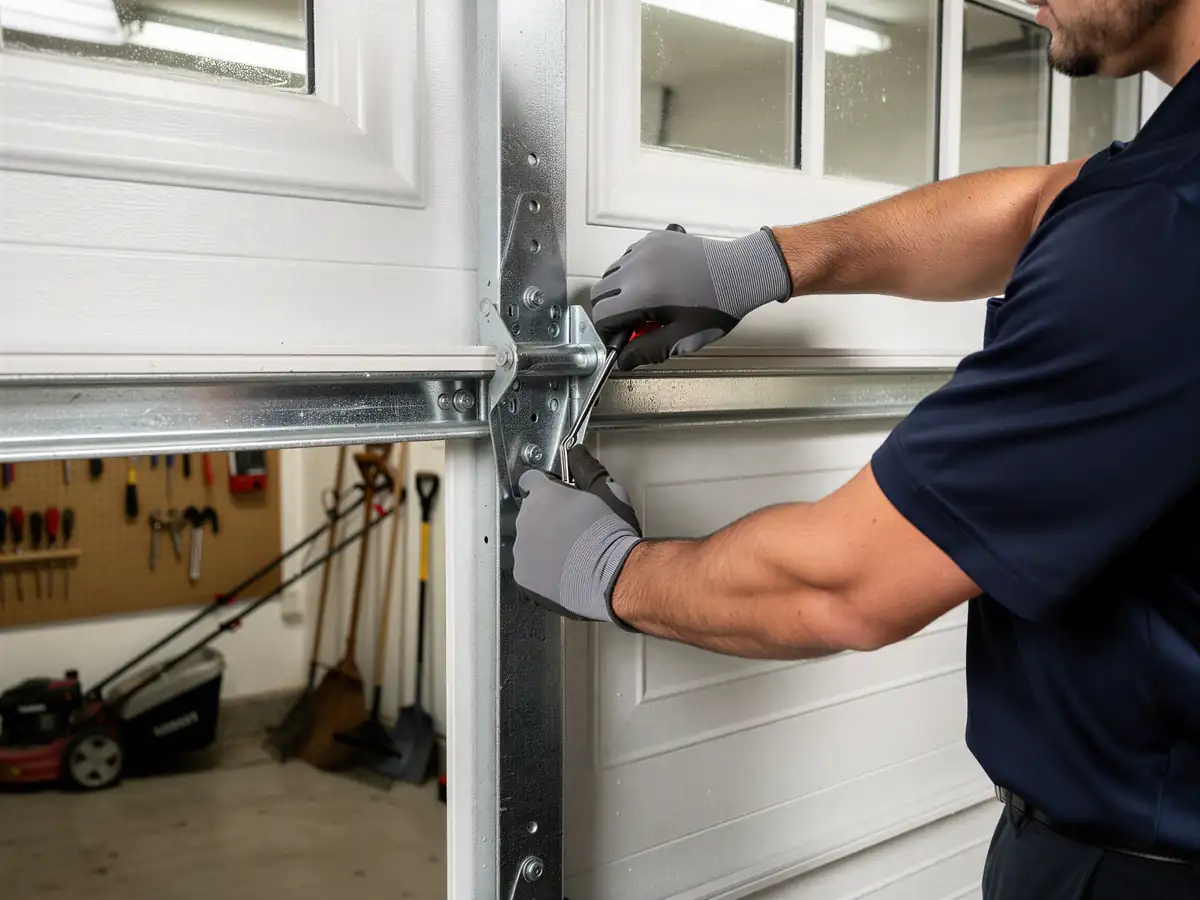
Blanchard's housing stock centers on 2001, newer than a lot of what we see closer to Moore, where the broader service area spans 1959 to 2004. That later build year matters for this specific problem. Doors going up around 2001 were almost all steel sectional panels on roller tracks rated for standard nylon or steel rollers, not the older wood or fiberglass panels that warp and bind over decades. The failure mode in a 2001-era door usually isn't the panel itself - it's a track that's worked loose from the jamb, a bent track rail from a bump, or roller brackets that have backed out their lag screws over twenty-plus years of cycling. We're coming from Moore, about 16 miles out, and the climate band here is the same cold-moderate conditions as the rest of the area, so freeze-thaw cycling at the track brackets is a real factor even on newer hardware. A door built to 2001 standard doesn't fail the same way a 1960s door does, and we set up the service call differently because of it.
How It Shows Up
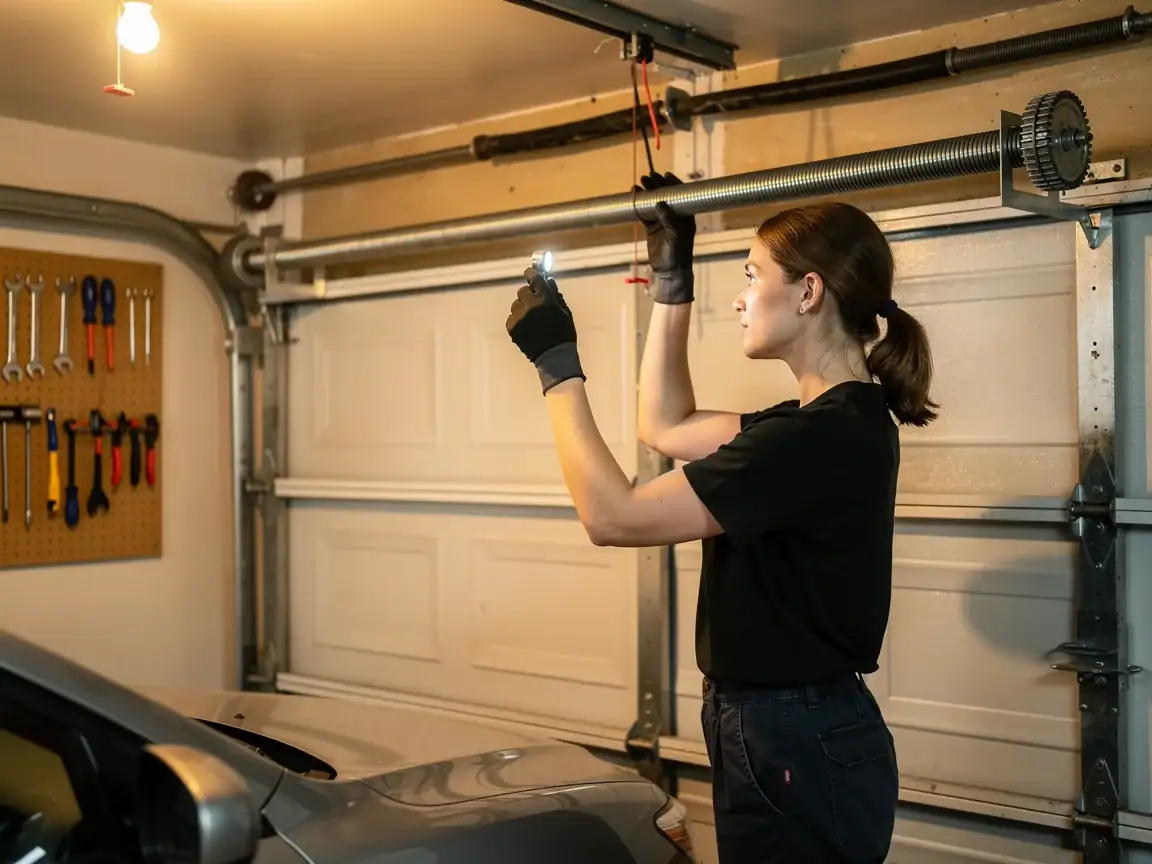
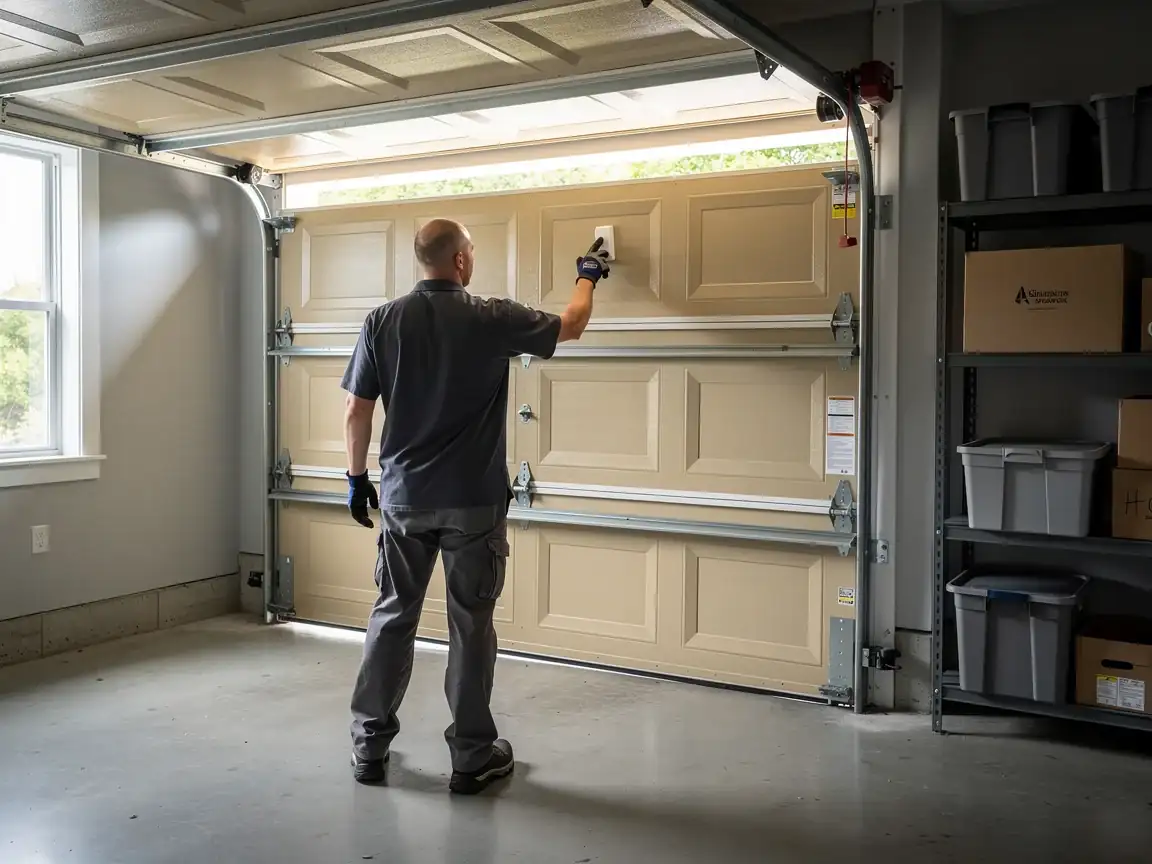
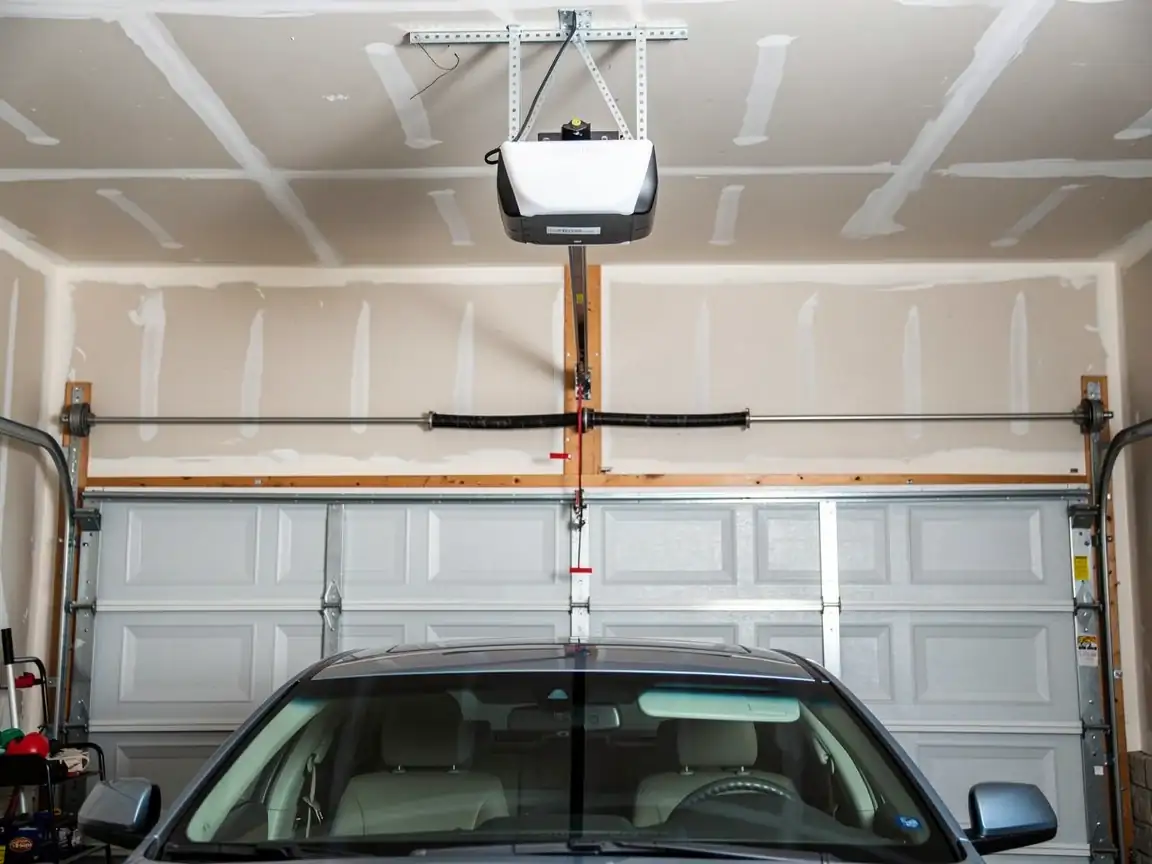
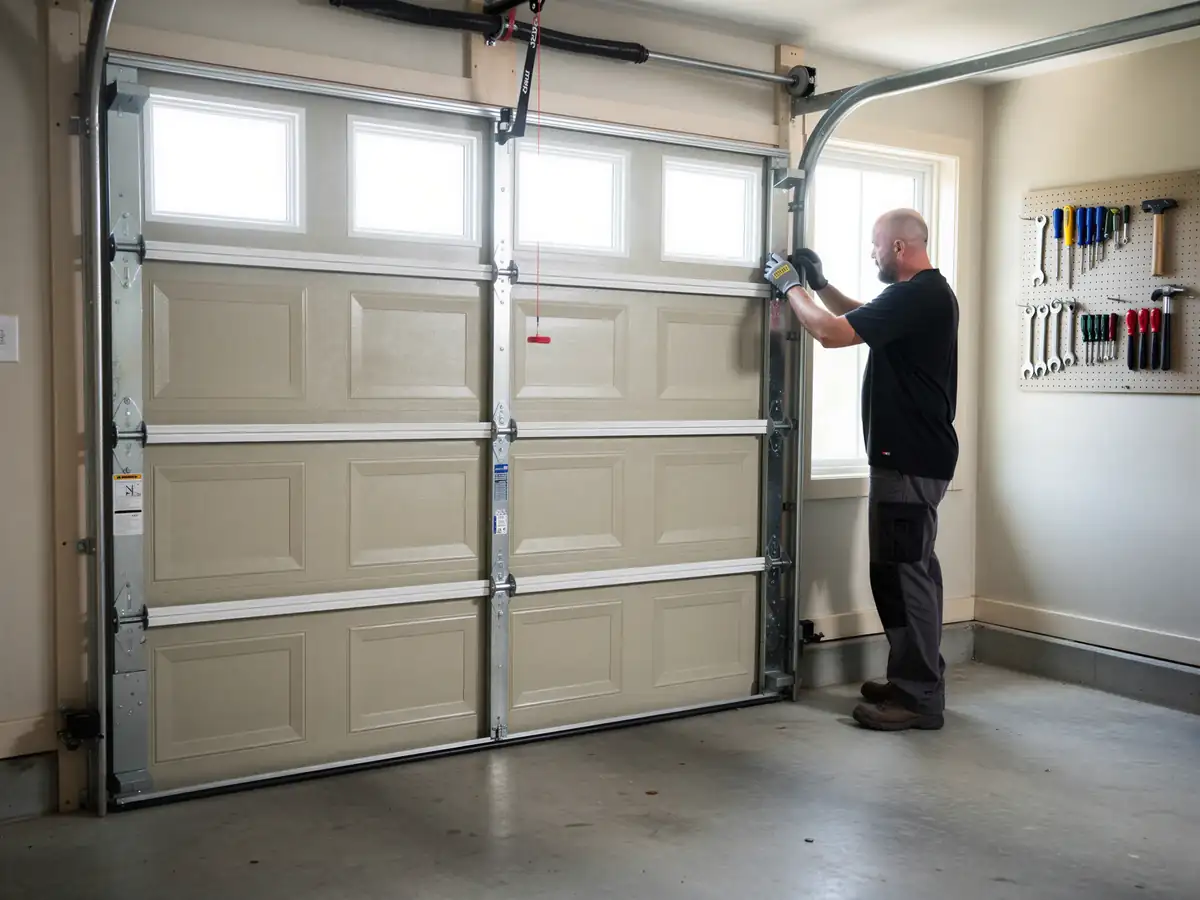
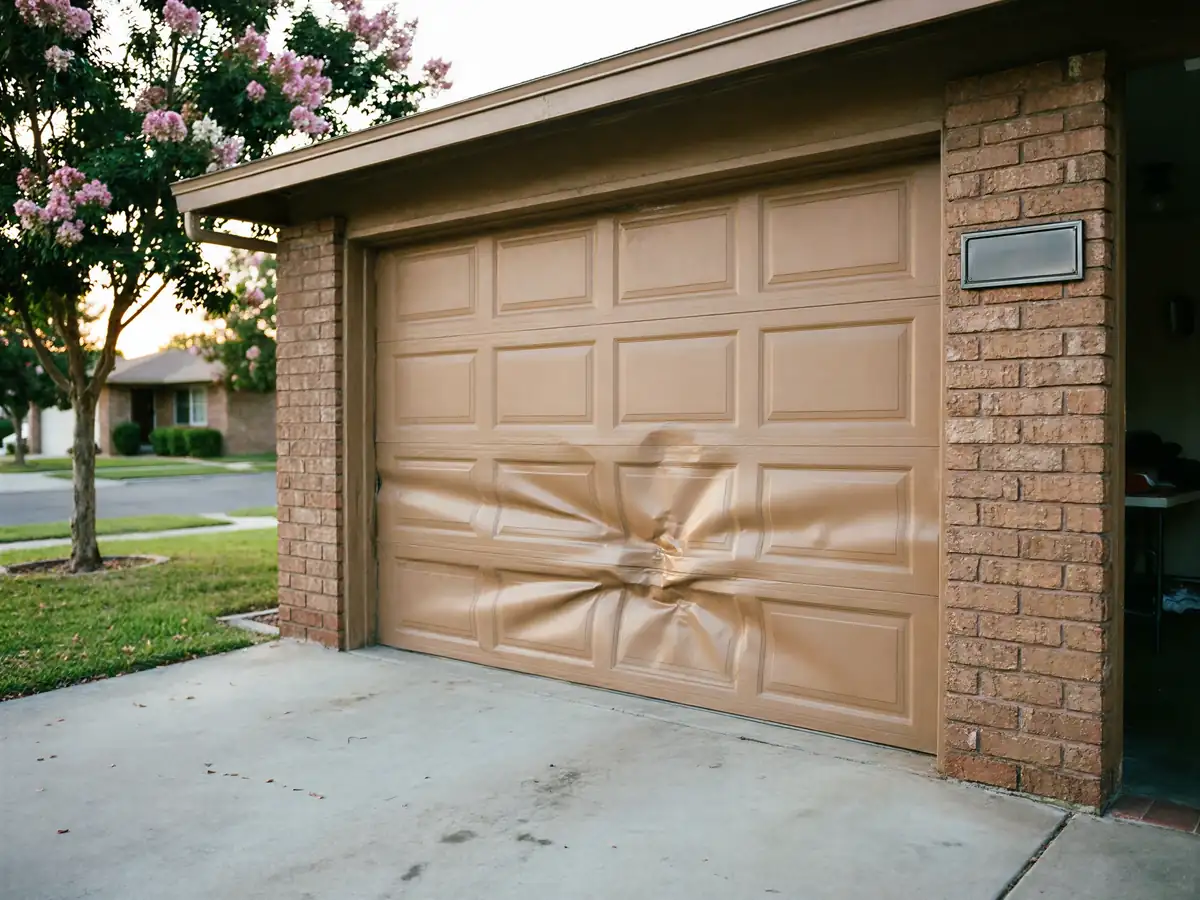
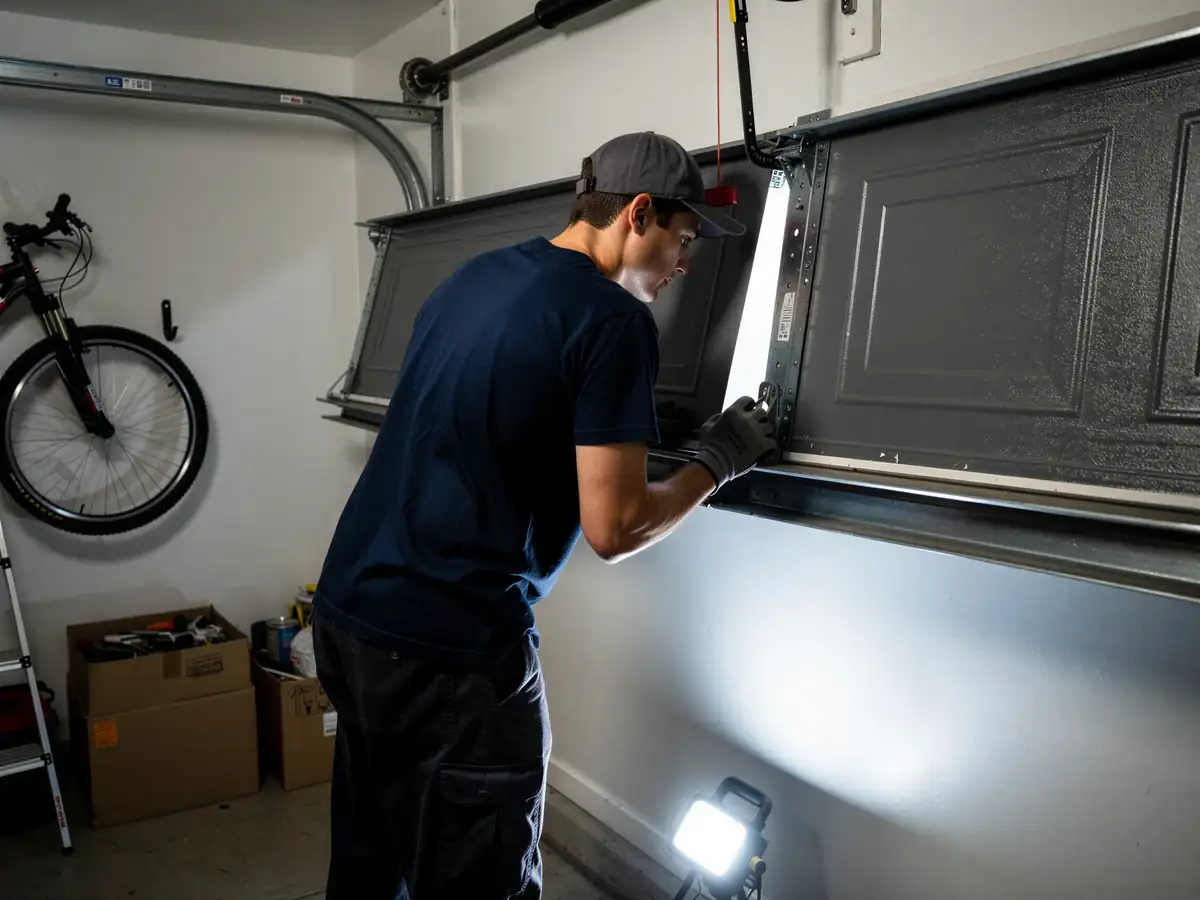
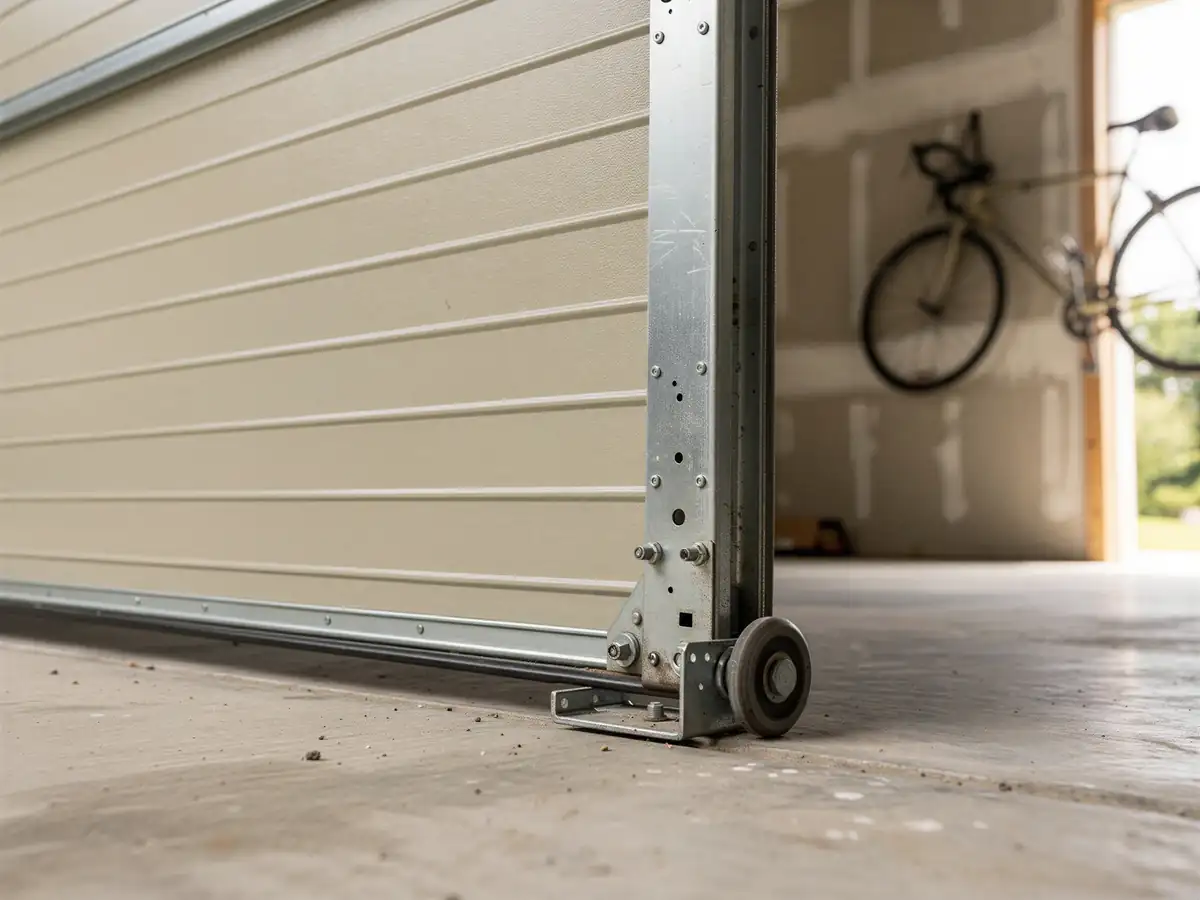
On a 2001-era door, off-track usually starts quiet. One corner of the door sits a little lower than the other when it's down, or you hear a scrape instead of a smooth roll partway through the cycle. Sometimes a roller pops clean out of the track and the door stops dead, cables still holding but going nowhere. On newer steel sectional doors like the kind that dominate Blanchard, the track itself is lighter-gauge than what you'd find bracing an older heavier panel, so a car bumper tap or a basketball hit can bow the rail just enough to throw rollers out of alignment without snapping anything. You'll also see it after a hard freeze-thaw stretch, when the bracket bolts into the jamb have backed out a sixteenth of an inch at a time. Don't keep running the opener once a door's off track - that's how a bent track turns into a cracked panel or a bent top section, which costs a lot more to put right.
Stocked Parts
For doors in the 2001-era range common across Blanchard, we carry standard-width galvanized track sections, nylon and steel rollers, and the lag hardware that matches the jamb-mount brackets used on sectional doors from that period. Track realignment on a bowed but not cracked rail is usually a same-visit fix with stock parts. Where we run short is older or oversized custom track - if a house turns out to be an outlier with wider or specialty door sizing, that part may need to be ordered, and we'll tell you that up front rather than guess.
What You Pay
We don't publish a flat number for off-track repair here because the fix ranges from a ten-minute bracket tightening to a full track and roller swap if the rail's bent beyond straightening. What we can tell you is the Blanchard service area runs a median household income of $89,472 across roughly 3,406 households, higher than the broader Moore-based area average, and most of the homes we see off-track calls for are mid-weight steel sectional doors from the 2001-era build wave - not the heavier older doors that push parts and labor up. We'll quote the job on site once we've seen whether it's a bracket, a bent rail, or both.