Can You Do This Yourself
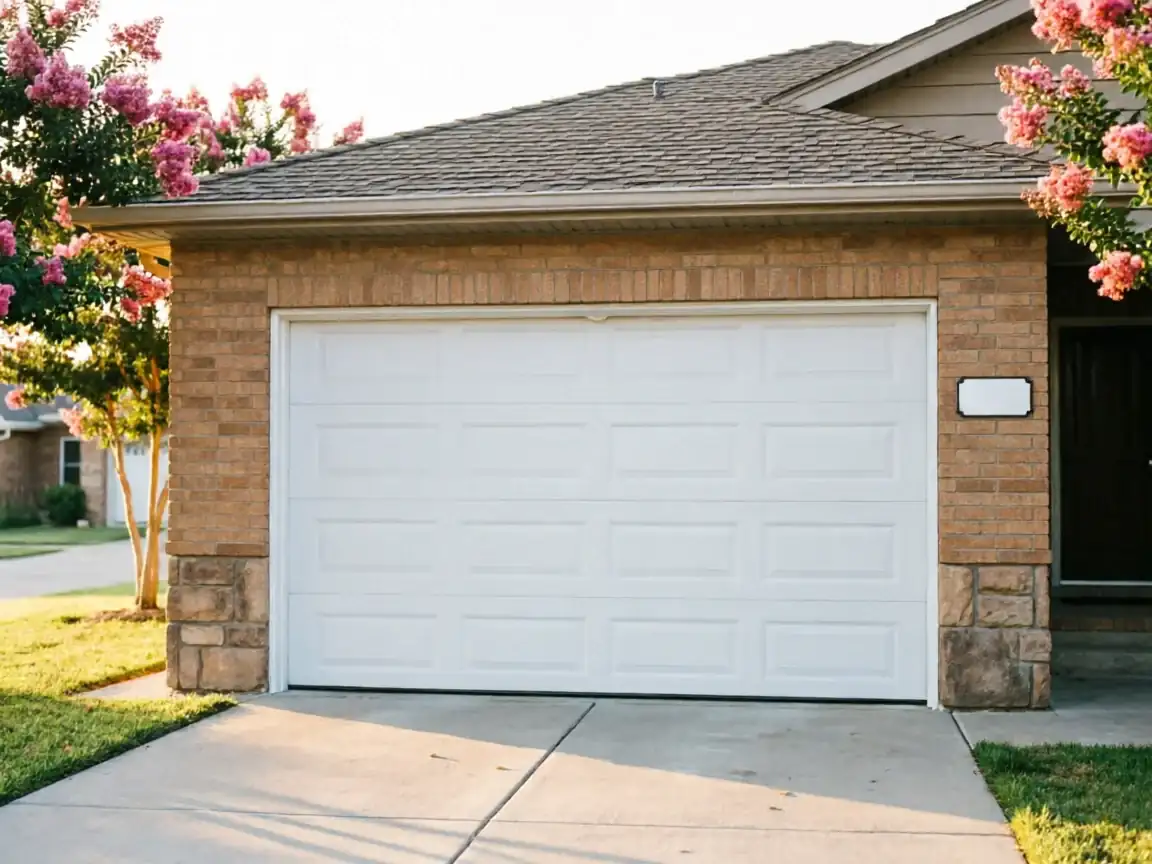
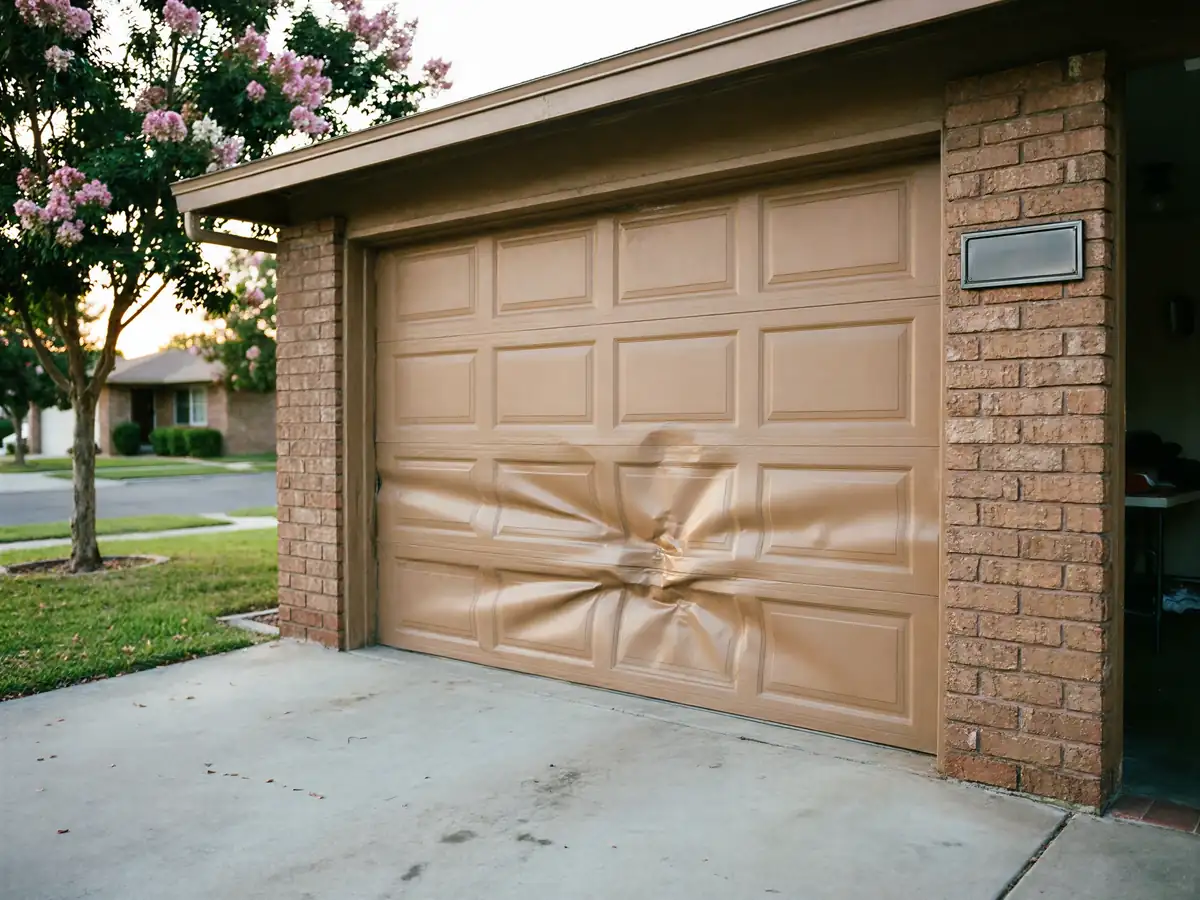
A single dented panel looks like a bolt-off job, and on newer doors it sometimes is. Nichols Hills is a different case. The typical house here went up around 1959, two decades ahead of the 1980 median for the rest of the service area, and the doors that went in at that time used panel heights and track spacing that manufacturers stopped making years ago. Pull one panel off a door like that without knowing the section depth and you can end up with a door that won't seat square in the frame, or a lone new panel that doesn't match the paint or the embossing on the rest. We've also seen owners order a "standard" panel online, have it arrive, and find it's an inch off in height. If your door is from this era, at minimum get the section measured before you buy anything. We're honest that a DIY swap on a door this old has a real chance of costing you a second trip and a second part.
What the Repair Takes
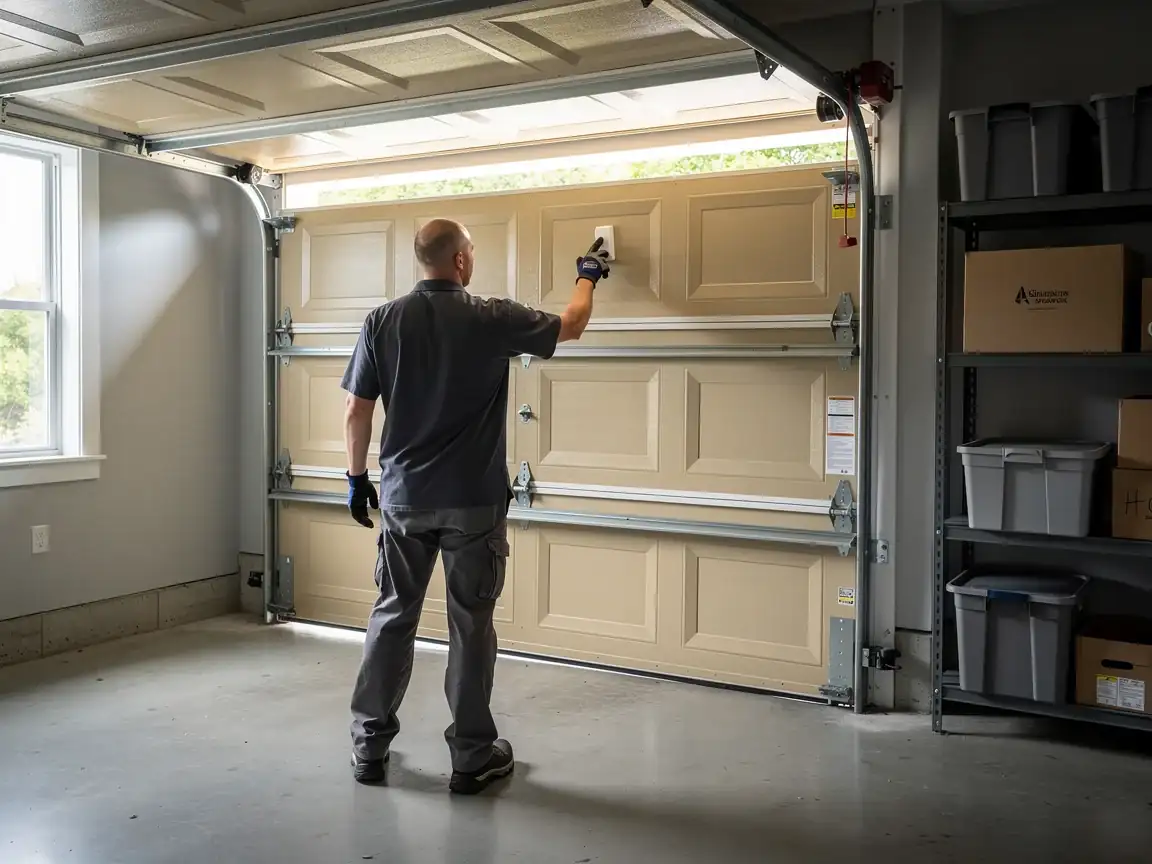
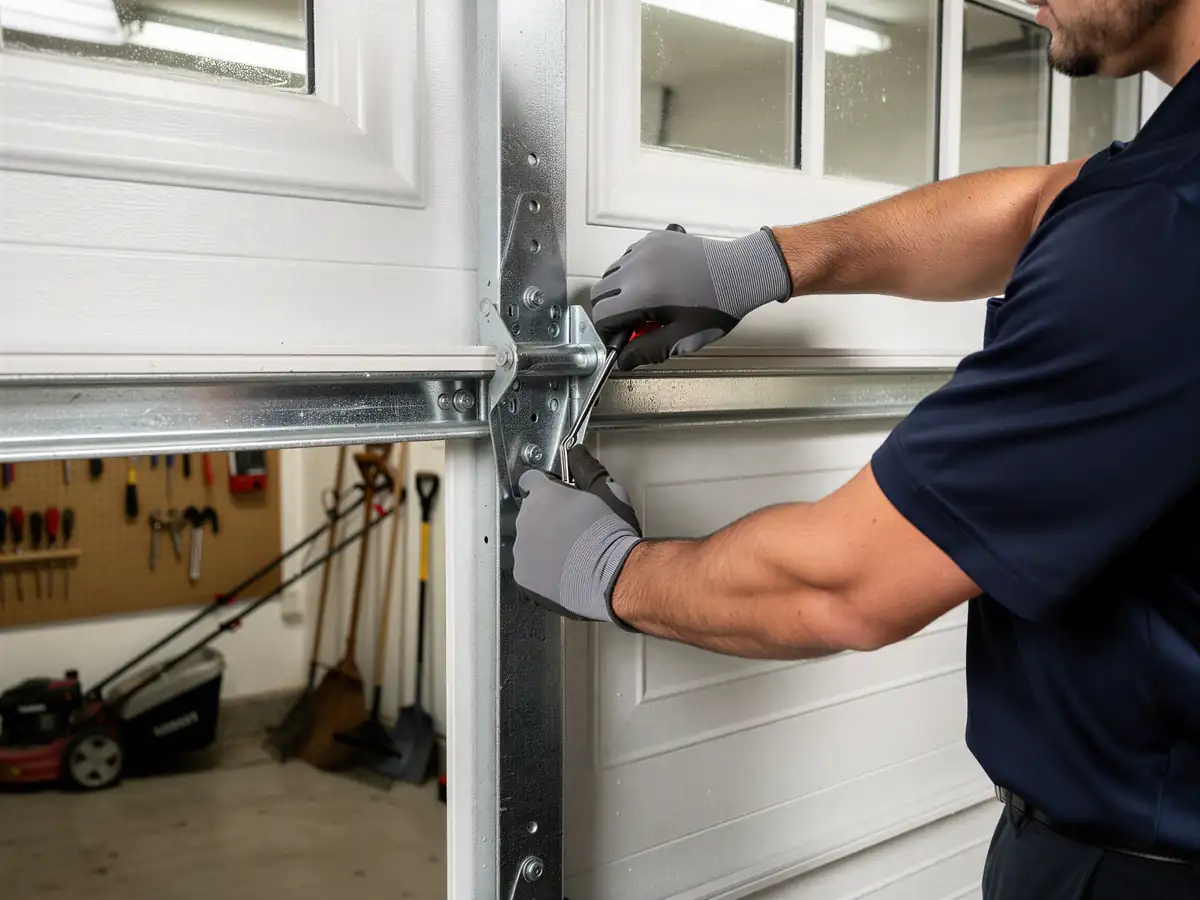
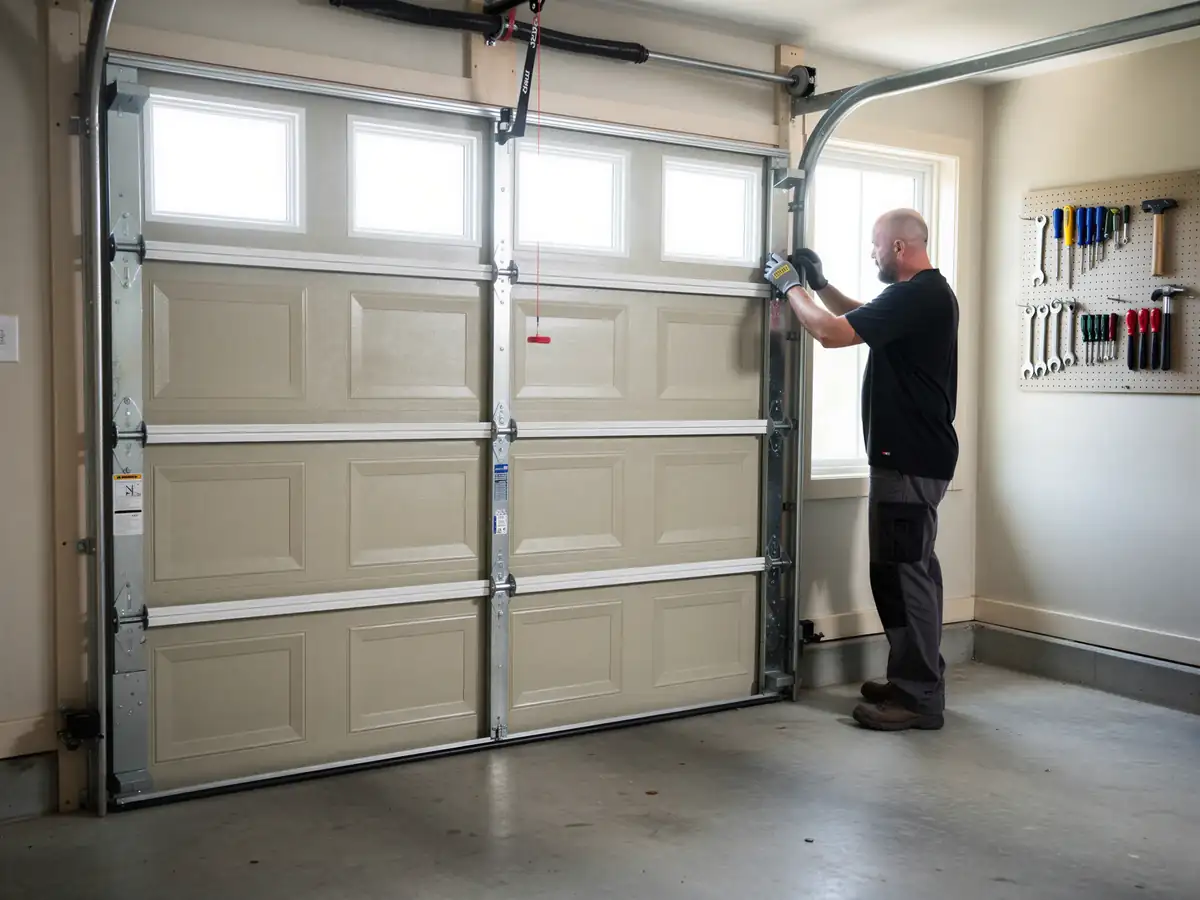
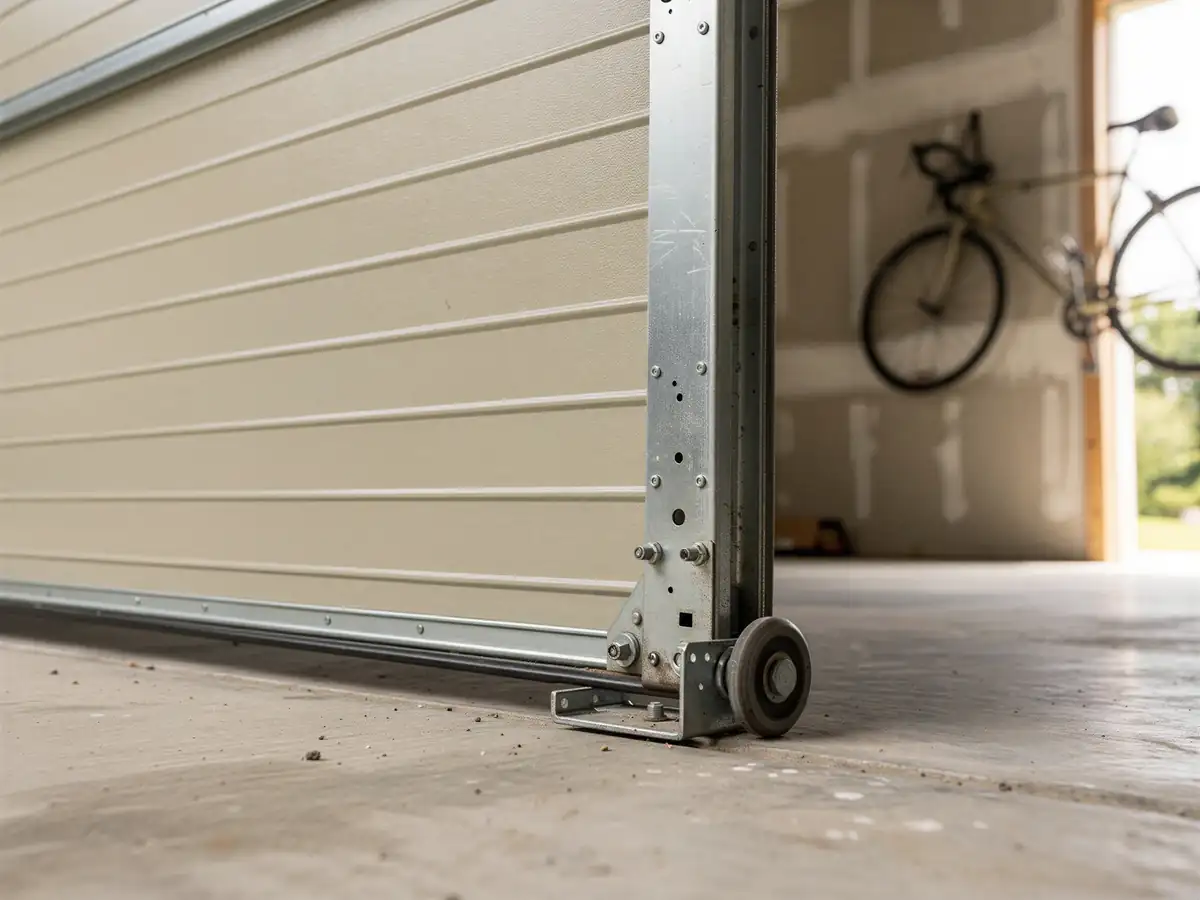
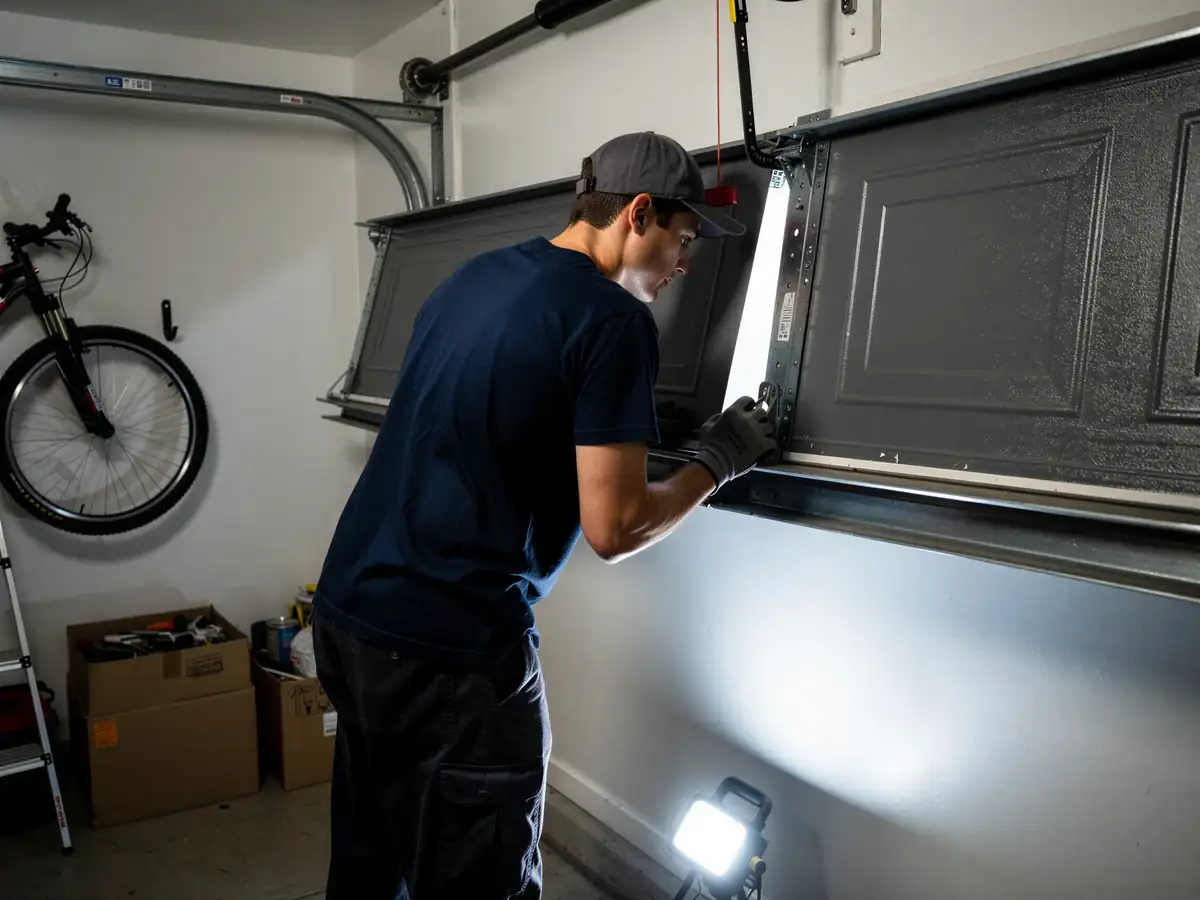
The job starts with identifying the section size, which on a 1959 door usually means measuring rather than looking up a model number, since the manufacturer may not still exist. We disconnect the spring tension, pull the hinges off the damaged section, and lift it clear of the track rollers without disturbing the panels above or below it. If a matching panel is available in the same gauge and rib pattern, it goes in and gets painted to match. If it isn't, and on doors this old that's common, the honest options are a close-enough panel that won't match perfectly, or replacing the full door. We'll tell you which one makes sense once we've seen the section in hand rather than guessing over the phone.
Time on the Job
A straightforward section swap, where a matching panel is on hand, runs under two hours once we're on site. Add time if the section has to be special-ordered to match an obsolete profile - that's a parts-lead-time issue, not a labor one, and it's the most common delay on a 1959-era door. Nichols Hills sits about 16 miles from our Moore shop, so factor that into scheduling; we're not based in town and don't carry every obsolete panel size on the truck. If the match requires a special order, we'll tell you the wait up front rather than let you find out when we show up without it.
Why It Happens Here
Nichols Hills holds roughly 1,540 households, a small slice next to the 61,473 across the full service area, and the median household income here runs close to $203,750 against the area's overall $81,105. That combination tends to mean original doors were higher-grade for their era and were maintained rather than replaced outright, which is why we still see so many 1959-vintage panels in service instead of having been swapped for big-box replacements decades ago. The cold winters common to this part of the state work on steel and hardware that's now over sixty years old, not the thirty- or forty-year doors that make up most of the rest of the area's stock. That age gap is the reason a panel job here is rarely a five-minute parts match.